Category: Editorial Articles

Sourced comparisons, field guides and wildlife research articles.

  • 21 Fun Facts About Axolotls That Sound Made Up

    21 Fun Facts About Axolotls That Sound Made Up

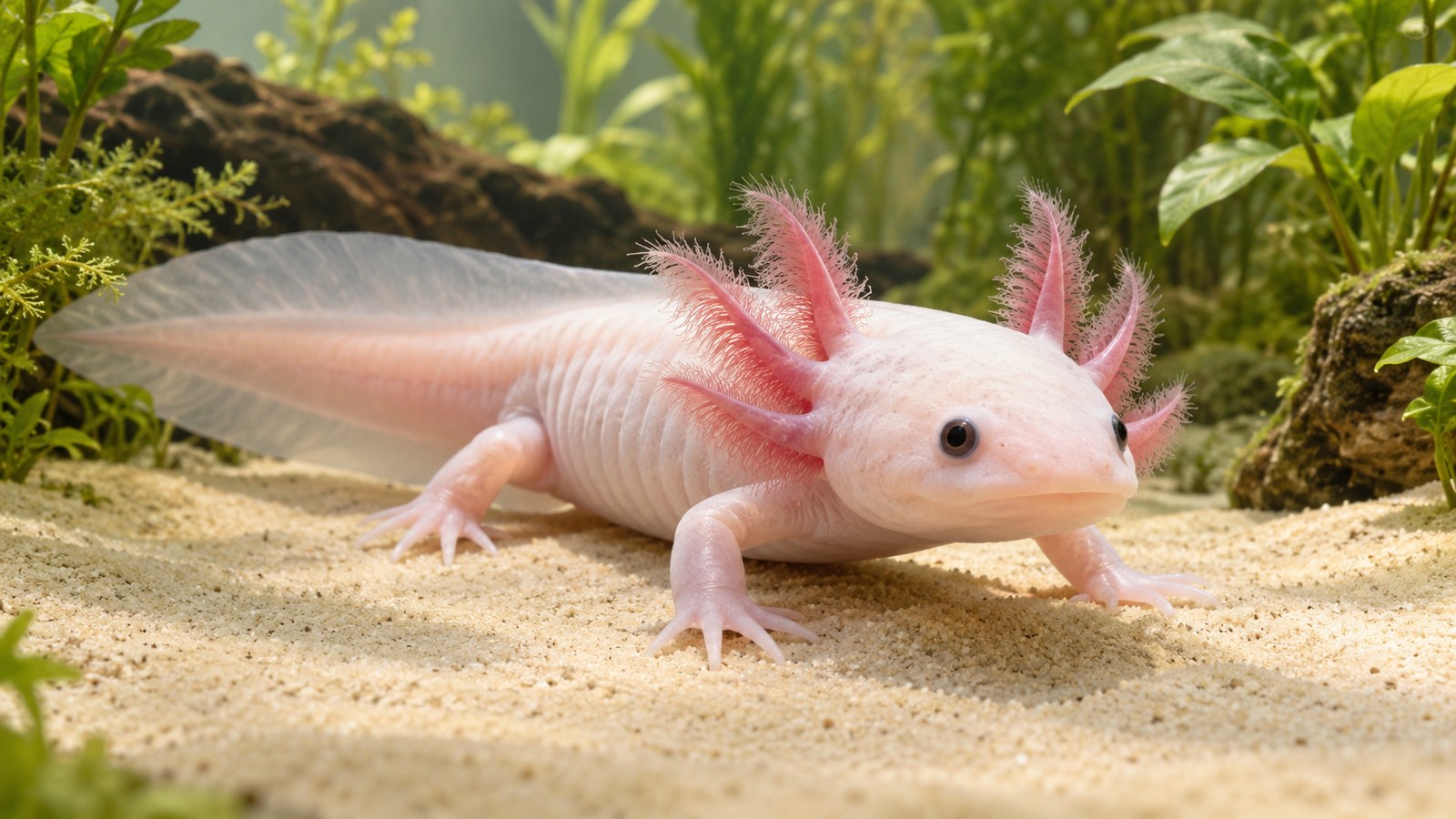
    Generated illustration of a pale axolotl in a planted freshwater aquarium
    AI-generated illustration.

    What if an animal could grow back a lost leg and keep its baby features as an adult? These fun facts about axolotls begin with real biology that sounds like a tall tale. The axolotl is a freshwater salamander from Mexico, with feathery gills and a life story far stranger than its aquarium portraits suggest.

    You will discover what those head frills do, why pink does not always mean albino, and how a tiny animal became part of both laboratory research and Aztec mythology. Along the way, we will separate common claims from careful facts, meet its wild habitat, and learn why an animal loved around the world still needs protection at home.

    1. They Can Regrow Entire Limbs

    Fun Fact: A lost leg can be replaced with a new limb containing several kinds of tissue.

    Losing a limb would change most animals’ lives forever. An axolotl can rebuild one, including structures needed for movement. Researchers study how its cells organize that repair. Regeneration takes time, and injuries still matter: this ability does not make the animal indestructible or safe to handle roughly. NIH: axolotl regeneration

    2. They Can Repair Parts of Their Hearts

    Quick Facts: Ability: Heart tissue repair | Studied in: Axolotls | Meaning: Regeneration after injury

    The surprise continues inside the body. Scientists have documented axolotls repairing damaged heart tissue and recovering heart function after experimental injury. That does not mean a heart can be removed and replaced without consequences. The useful discovery is how living tissue rebuilds itself, a question researchers are still investigating. Cardiac regeneration research

    3. They Can Regenerate Parts of Their Spinal Cords

    • The spinal cord carries signals between brain and body.
    • Axolotls can regenerate damaged spinal cord tissue.
    • Researchers study both tissue repair and movement.
    • Results in salamanders do not establish a human treatment.

    Behind each small step lies a nervous system sending messages to muscles. An axolotl can repair spinal cord damage in ways humans cannot routinely achieve. Scientists examine that process to understand the cells involved. It is a real biological ability, but its medical possibilities need careful study rather than promises. Aarhus University: spinal cord regeneration

    4. They Keep Their Baby Features as Adults

    Feature What happens in an adult
    External gills Usually remain visible
    Tail fin Remains suited to swimming
    Reproduction Adults can breed despite juvenile traits

    Growing up does not always mean changing your whole appearance. Axolotls reach adulthood while keeping features associated with young salamanders. Scientists call this paedomorphosis, often described as neoteny. Their youthful shape is a normal part of their life history, not proof that every frilly animal you see is a baby. Natural History Museum

    5. Their Feathery Head Frills Are Gills
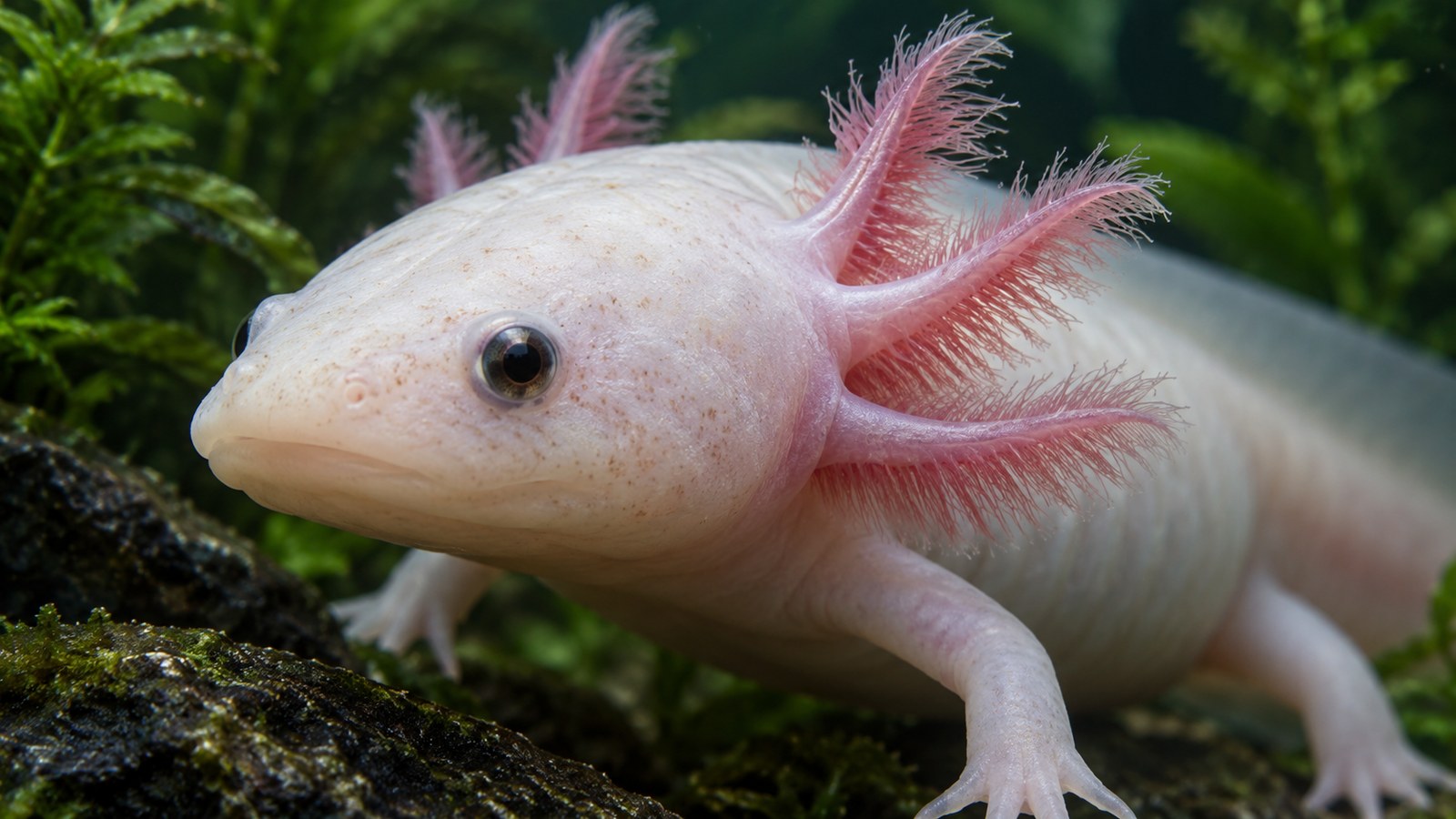
    Generated close-up illustration of an axolotl’s external gills
    AI-generated illustration.

    Fun Fact: Those fluffy-looking branches are breathing structures, not hair, ears or decorations.

    Look beside the head and you will see three branching gill stalks on each side. Their delicate filaments help exchange gases with the surrounding water. This makes a close photograph a useful biology lesson: the prettiest feature in the portrait is also part of the equipment keeping the animal alive. Point Defiance Zoo & Aquarium

    6. They Have Lungs Alongside Their Gills

    Quick Facts: Breathing structures: Gills, lungs and skin | Home: Freshwater | Surface visits: Possible

    A trip toward the water surface can have a simple explanation. Axolotls possess lungs and sometimes take in air, even though their gills remain prominent. Having lungs does not turn them into ordinary land pets. Their usual way of life still depends on staying in a suitable aquatic environment. Akron Zoo

    7. Their Skin Helps Them Breathe

    • Gills are not their only breathing surface.
    • Gas exchange also occurs through the skin.
    • The skin remains in contact with the water.
    • A healthy aquatic environment matters throughout life.

    Skin does more than wrap an axolotl’s body. It contributes to breathing, alongside the other structures you have already met. That is a useful reminder when learning about amphibians: a body surface can have several jobs. For a pet, water conditions belong at the centre of everyday care. Royal Veterinary College care guide

    8. They Are Salamanders, Not Fish

    Name or group Does it fit?
    Amphibian Yes
    Salamander Yes
    Mexican walking fish Nickname, not scientific classification

    Despite the nickname, this animal belongs with salamanders in the amphibian group. Its scientific name is Ambystoma mexicanum. The tiger salamander is a relative, while a goldfish belongs to a different branch of the animal family tree. Sharing an underwater home does not make two animals close relatives. University of Michigan: Animal Diversity Web

    9. They Usually Spend Their Whole Lives Underwater

    Fun Fact: An adult axolotl can reproduce without making the usual salamander transition to life on land.

    For many amphibians, growing up includes a major change in body shape and habitat. Axolotls usually keep their aquatic form instead. Rare metamorphosis can occur, so saying they can never change is too strong. Their normal life story, however, does not require leaving the water to become an adult. American Museum of Natural History

    10. Their Wild Home Is in Mexico City

    Quick Facts: Native region: Central Mexico | Famous habitat: Xochimilco | Setting: Freshwater wetlands and canals

    Think of Mexico City and busy streets may come to mind before salamanders. Yet the Xochimilco wetland and canal system is central to the wild axolotl’s story. Its ancestors occupied a larger lake landscape. Understanding that small geographic home helps explain why protecting particular waterways matters so much today. San Diego Zoo Wildlife Alliance: distribution

    11. They Live in Freshwater, Not the Sea

    • Their natural habitat is inland.
    • Lakes and canals belong to their story.
    • Ocean reefs do not.
    • Aquatic means living in water, not necessarily seawater.

    A frilly face can look at home in ocean artwork, but the real animal belongs in freshwater. A seahorse makes a better example of marine wildlife. For a school project, placing axolotls beside lakes, aquatic plants and canals gives a much more accurate picture of their natural setting. University of Michigan: Animal Diversity Web

    12. Wild Axolotls Usually Have Dark Colors
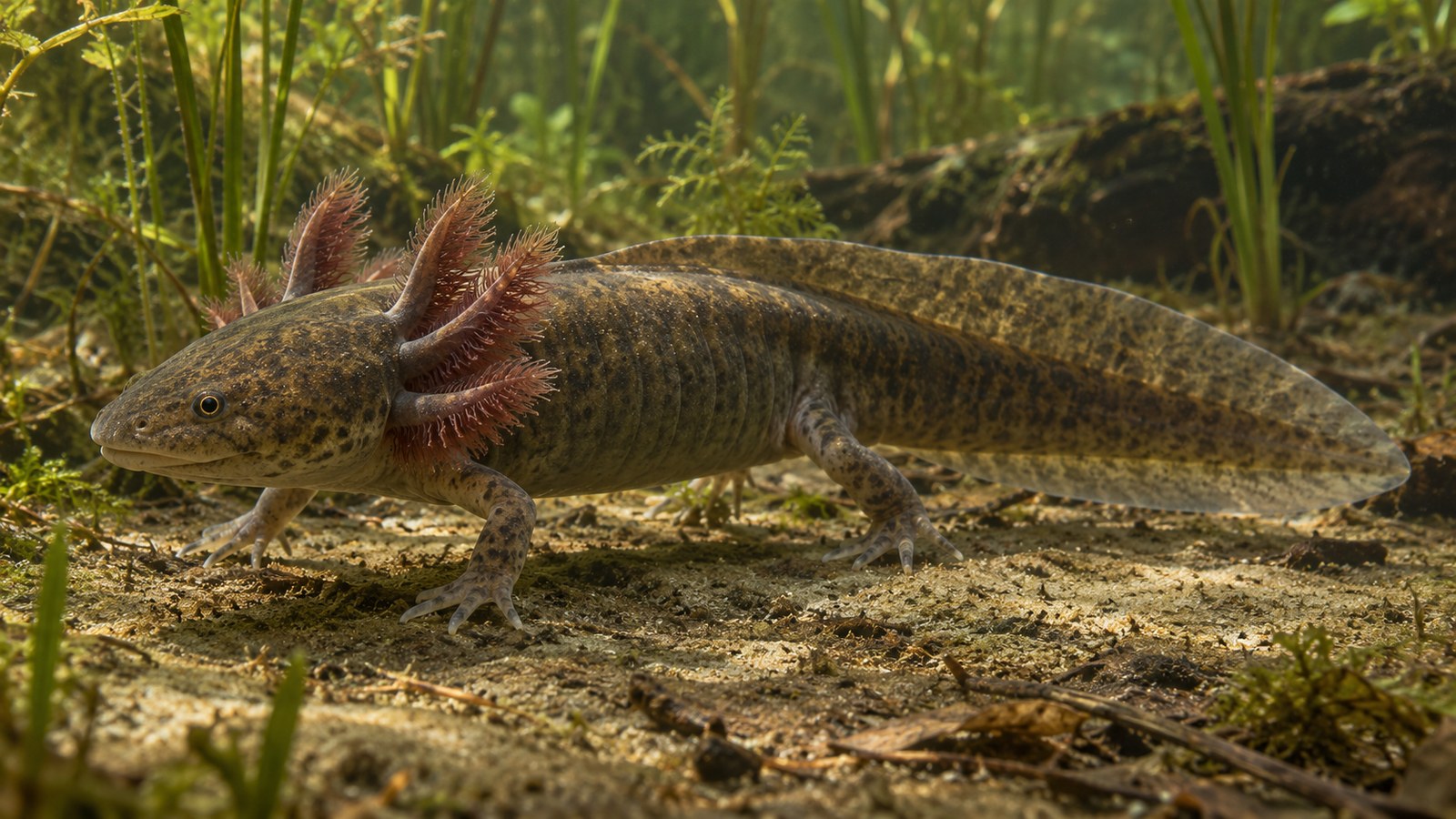
    Generated illustration of a dark wild-type axolotl in a reconstructed freshwater habitat
    AI-generated illustration.
    Appearance Where it fits
    Dark brown or nearly black Typical wild coloration
    Mottled skin Helps the animal blend with its surroundings
    Pale or golden varieties Familiar in managed care

    Brown is easy to overlook when pink animals fill your screen. Wild axolotls typically wear darker colors that suit muddy surroundings. This is the version to remember when thinking about their original habitat. A pale aquarium animal and a dark wild-type animal can still belong to the same species. San Diego Zoo Wildlife Alliance: characteristics

    13. Pink Axolotls Are Not Always Albino

    Fun Fact: A pale axolotl with dark eyes may be leucistic rather than albino.

    Color names describe different pigment patterns, not different species. Leucistic axolotls can have pale bodies while retaining dark eye pigment. Albino animals lack dark melanin pigment, including in their eyes. A photograph needs clear detail before you label it, especially when lighting changes how pink or white the skin looks. Axolotl colour genetics

    14. They Suck Food Into Their Mouths

    Quick Facts: Diet: Carnivore | Feeding method: Suction | Wild prey: Small aquatic animals

    Dinner arrives in a sudden gulp. By opening its mouth quickly, an axolotl draws in water and nearby prey. Small animals such as worms and insect larvae can become a meal. Its quiet appearance can be misleading: this gentle-looking face belongs to a predator built for catching food underwater. San Diego Zoo Wildlife Alliance: diet

    15. Their Tiny Teeth Grip Rather Than Chew

    • Axolotls do have teeth.
    • The teeth are small.
    • They help capture and hold food.
    • They do not chew food the way people do.

    That wide mouth hides teeth much less dramatic than a crocodile‘s. An axolotl uses its small teeth during food capture, then swallows rather than grinding a meal into pieces. The interesting contrast is between its modest dental equipment and the quick suction action that brings prey within reach. San Diego Zoo Wildlife Alliance: characteristics

    16. They Are Often More Active at Night

    Observation Careful interpretation
    Activity after dark Reported in managed care
    Daytime hiding Can occur
    Wild daily routine Less fully documented

    Evening can reveal movement that a daytime visitor misses. Axolotls are often described as nocturnal, and keepers report increased activity at night. Still, their wild behavior is not fully understood. It is more accurate to describe a tendency than to claim every animal follows exactly the same daily timetable. San Diego Zoo Wildlife Alliance: behavior

    17. Their Front and Back Feet Have Different Toe Counts

    Fun Fact: A typical axolotl has four digits on each front foot and five on each back foot.

    Count carefully in a clear photograph and the front and rear feet reveal different patterns. Four at the front, five at the back is the usual arrangement. Individual differences can occur, including after injury. This makes counting toes a good observation activity, provided you use photographs instead of handling animals. Axolotl limb research

    18. Females Can Lay Hundreds of Eggs

    Quick Facts: Reproduction: Eggs | Egg covering: Jelly | Attachment sites: Underwater surfaces and vegetation

    One female can produce hundreds of eggs, with the number varying between animals and conditions. Jelly surrounds the developing embryos, and eggs attach to underwater surfaces. A large clutch does not guarantee a large surviving family. Eggs and young face risks, which helps explain why breeding and conservation are different challenges. San Diego Zoo Wildlife Alliance: reproduction

    19. Their Name Has Roots in Nahuatl

    • The name comes from Nahuatl.
    • English translations vary.
    • Water dog is one familiar translation.
    • The word carries cultural history as well as a species identity.

    Before axolotls became international aquarium favourites, people in Mexico already knew and named them. Their Nahuatl name is often translated as water dog or water monster, among other interpretations. Keeping that language connection in the story helps readers see a local animal with a history, rather than just an internet character. San Diego Zoo Wildlife Alliance: taxonomy

    20. They Have a Place in Aztec Mythology

    Part of the story What it represents
    Xolotl A deity in Mexica or Aztec tradition
    Transformation into an axolotl An element of mythology
    Modern axolotl research Biological study of a real amphibian

    According to an Aztec tradition, the god Xolotl took the form of an axolotl while trying to escape death. That is a cultural story, not a scientific explanation for regeneration. Reading the two side by side makes the animal more interesting: its place in human imagination has deep local roots. San Diego Zoo Wildlife Alliance: taxonomy

    21. Popularity as Pets Has Not Saved Them in the Wild

    Fun Fact: An animal can be familiar in aquariums while its wild population remains in serious trouble.

    The IUCN Red List classifies Ambystoma mexicanum as Critically Endangered. Habitat damage, pollution and introduced fish threaten wild animals. Captive breeding does not automatically restore healthy wetlands or the original population. Protecting this axolotl means caring about its home, not simply counting how many pets appear in photographs. San Diego Zoo Wildlife Alliance: population

    Frequently Asked Questions

    Are axolotls good pets for kids?

    Axolotls can interest children, but their care should be an adult responsibility. They need a suitable aquarium, stable water conditions and careful maintenance. They are animals to observe rather than cuddle. Before getting one, discuss the setup with an amphibian-experienced vet and learn what daily care involves. VCA: axolotls as pets

    Can axolotls live out of water?

    Normally, no. Axolotls live in water and retain the gills and body form suited to that habitat. Rare metamorphosis is possible, but that does not make taking a normal pet onto land safe. Watch them through the aquarium glass and keep routine handling to a minimum. Natural History Museum

    What do axolotls eat?

    Axolotls eat animal prey, including worms, insect larvae and other small aquatic creatures. Pet diets need to suit the animal’s size and life stage. Ask an amphibian-experienced vet before changing a diet, and avoid treating a list of wild prey as a complete feeding plan for an aquarium animal. VCA: axolotls as pets

    Why are axolotls endangered?

    Wild axolotls face habitat loss, polluted water and pressure from introduced fish. Their small natural range makes damage to those waterways especially serious. The IUCN lists the species as Critically Endangered. Animals bred as pets do not remove the need to protect and restore the wild habitat. IUCN Red List assessment

    How big do axolotls get?

    Axolotls can reach about 30 cm (12 in) in total length, although individual size varies. Their tail makes up a noticeable part of that measurement. A tiny juvenile therefore does not stay tiny forever, which matters when planning a suitable home or comparing photographs taken at different ages. American Museum of Natural History

    Which Axolotl Fact Surprised You Most?

    A salamander that can rebuild a limb already sounds invented. Add gills that remain into adulthood, feet with different toe counts, and a name tied to an old tradition, and the real animal becomes even more memorable. These fun facts about axolotls also lead back to one important place: the freshwater habitat they need in Mexico.

    Save this pin for your next homeschool science session or animal quiz. Then explore more animals on All About Creatures, from the spotted salamander to other amphibians with life stories worth a closer look.


  • How to Read Common Dog Body Language

    How to Read Common Dog Body Language

    Read the whole dog, not one signal

    Dog body language is a moving conversation made from posture, muscle tension, eyes, ears, mouth, tail, weight distribution, movement, and distance. A wagging tail does not always mean friendliness, and a closed mouth does not always mean danger. The same gesture can mean different things depending on what happened just before it, what the dog can see, and whether the dog has room to move away.

    Start by observing the whole body and the situation. Ask whether the dog looks loose or stiff, whether movement is curved or direct, and whether the dog is approaching voluntarily or trying to create distance. Compare what you see with that individual dog’s normal posture. Breed shape matters too: a curled tail, cropped ears, long coat, short muzzle, or very low carriage can hide signals that are easier to see on another dog.

    Relaxed dogs look loose and able to disengage

    A comfortable dog usually has soft muscles, a neutral or gently moving tail, relaxed ears, and eyes that do not hold a hard stare. The mouth may be softly open or closed. Weight is balanced rather than pitched sharply forward or backward. The dog can sniff, look away, settle, or leave without appearing frozen. Dogs Trust describes relaxed dogs as loose and wiggly, with soft eyes and little visible tension.

    A play bow, with the front end lowered and the rear raised, commonly invites play. Healthy play includes pauses, role changes, and chances for both dogs to disengage. One animal should not have to keep fleeing, hiding, or defending itself. The Beagle care guide and German Shepherd guide offer breed context, but individual history and current emotion remain more useful than stereotypes.

    Early stress signals are easy to miss

    A worried dog may turn the head away, avoid eye contact, lick the lips when no food is present, yawn, blink, lift a front paw, lower the body, pull the ears back, or carry the tail low. Panting without heat or exercise, pacing, shaking, drooling, and showing the whites of the eyes can also accompany distress. Cornell University’s veterinary guidance lists several of these signs while emphasizing that anxiety is not a simple one-sign diagnosis.

    These actions do not form a rigid checklist. A dog can yawn because it is tired and lick its lips after eating. Context and combinations matter. A yawn, turned head, lowered tail, and attempt to move away during a hug are more informative together than a single yawn on a bed. When several signals appear, reduce pressure before the dog has to communicate more forcefully.

    Stillness can be a serious warning

    People often notice barking or growling but overlook freezing. Sudden stillness, a tightly closed mouth, a hard stare, forward weight, raised hackles, or a rigid tail can signal that a dog feels threatened or is preparing to act. The American Veterinary Society of Animal Behavior warns that a stiff dog being crowded or petted may already be communicating discomfort even without noise.

    Do not test the warning by reaching closer. Stop the interaction, turn slightly sideways, avoid looming, and create a clear exit. Call children and other animals away calmly. If the dog is guarding food, a toy, a resting place, or a person, do not grab the item or punish the growl. Management and help from a qualified reward-based professional are safer than confrontation.

    Tail wags need context

    A tail wag shows arousal and social engagement, not a guaranteed friendly intention. A broad, loose wag that moves the hips often appears in a relaxed greeting. A high, fast, tight wag on a stiff body can occur with intense alertness or conflict. A low wag with crouching, ears back, and retreat may belong to a worried dog seeking space.

    Tail height must be judged against the dog’s normal anatomy. Some breeds naturally carry the tail high, while others have curled, short, or heavily feathered tails. Watch the base of the tail and the rest of the body. If the face is tense, movement is frozen, or weight shifts backward, the wag does not cancel those warning signs.

    Eyes, ears, and mouth add detail

    Soft eyes, normal blinking, and a flexible face usually fit comfort. Rounder eyes, visible whites, furrowed brows, or a fixed stare can appear with fear or defensive arousal. Ears may move back during worry or social appeasement and forward during alertness, but natural ear shape changes how obvious this looks. Read both ears with the body rather than treating one position as a universal translation.

    An open, relaxed mouth differs from a tight mouth with lips pushed forward. Showing teeth can be a warning, but some dogs produce a tense-looking submissive grin. Growling is useful information that the dog needs more distance. Punishing it can suppress an audible warning without changing the fear or conflict underneath.

    Respond to discomfort by lowering pressure

    If a dog looks uneasy, pause and give space. Let the dog choose whether to approach. Avoid direct staring, bending over the head, hugging, cornering, or reaching into a crate or under furniture. Use barriers, a leash handled without jerking, or a quiet room to separate animals and people. For greetings, allow curved approaches and short interactions with breaks.

    Reward-based training can teach useful exits such as moving to a mat, touching a hand target, or turning away with the handler. The AVSAB humane dog training statement recommends reward-based methods and rejects aversive tools. If body language changes suddenly, arrange a veterinary examination because pain, sensory loss, illness, or medication effects can alter behavior.

    Children need active adult supervision

    Adults should manage every close interaction between young children and dogs. A child may miss lip licking, freezing, or attempts to retreat. Give the dog a protected resting place and never allow climbing, hugging, face-to-face contact, disturbance during sleep, or grabbing food and toys. “The dog has always tolerated it” is not a safety plan; tolerance can end when the dog is tired, sore, startled, or trapped.

    Teach children to pause and call an adult when a dog moves away, stiffens, hides, growls, or shows teeth. Dogs Trust advises respecting early signals so situations do not escalate. Supervision means an adult is close enough to intervene immediately, not merely present elsewhere in the room.

    When to seek professional help

    Ask a veterinarian for help when fear, guarding, lunging, snapping, or a sudden behavior change appears. Record the trigger, distance, environment, recovery time, and complete body posture without provoking another episode. Video from a safe distance may help, but safety comes first. A veterinarian can check for medical contributors and refer to a veterinary behaviorist or other qualified professional.

    Urgent separation is appropriate after a bite, repeated attempts to bite, escalating conflict between household animals, or danger to a child. Avoid trainers who promise a rapid “dominance” fix or rely on pain, intimidation, flooding, leash corrections, shock collars, or forced exposure. Good plans change the environment, protect everyone, and teach alternative behavior while keeping the dog below its panic threshold.

    Frequently asked questions

    Does a wagging tail always mean a dog is friendly?

    No. A wag reflects arousal and communication. Judge its height and looseness together with the dog’s muscles, face, movement, and context.

    Why does my dog show the whites of the eyes?

    Visible eye white, sometimes called whale eye, can occur when a dog turns the head away while watching a concern. With tension or guarding, it is a sign to stop and give space.

    Should I punish a dog for growling?

    No. A growl communicates discomfort. Increase distance, manage the trigger, and seek qualified help rather than suppressing a warning while leaving the underlying emotion unchanged.

    What should I do when a dog freezes?

    Stop approaching or touching, calmly create space, and remove children or other animals. Sudden stillness can be an important warning even when the dog is silent.

    Sources

  • Why Cats Purr and What Purring Can Mean

    Why Cats Purr and What Purring Can Mean

    A purr is a sound, not a diagnosis

    A cat’s purr is one of the most familiar animal sounds: a quiet, rhythmic vibration that can continue through both inhalation and exhalation. People often translate it as “I am happy,” and that interpretation is sometimes right. A relaxed cat may purr while resting beside a trusted person, kneading a blanket, or receiving gentle attention. Yet purring also occurs during nursing, food requests, stress, injury, and veterinary emergencies. The useful question is therefore not simply whether a cat is purring, but what else the cat’s body and circumstances are saying.

    Good interpretation combines sound with posture, facial tension, movement, appetite, breathing, litter-box habits, and recent changes. A purr beside a loose body, half-closed eyes, normal eating, and voluntary contact has a different context from a purr beside hiding, stiffness, rapid breathing, or refusal to eat. Listening carefully matters, but observation matters more.

    How cats produce the vibration

    Researchers have long debated how a small larynx produces such a low, steady sound. The traditional explanation emphasized rapid, repeated activation of laryngeal muscles under nervous-system control. A 2023 experimental study, Domestic cat larynges can produce purring frequencies without neural input, tested eight excised domestic-cat larynges. Airflow alone produced self-sustaining low-frequency oscillation. Histology also found connective-tissue pads embedded in the vocal folds, which may add mass and help the small organ vibrate at purring frequencies.

    That result challenges the idea that every pulse must be driven by a separate muscle contraction, but it does not mean a living cat’s brain is irrelevant. A living animal still initiates and stops airflow, changes posture, and purrs in particular social or emotional settings. The study explains a physical capacity of the voice box; it does not settle every question about neural control, motivation, or meaning.

    Purring begins in early social life

    Kittens can purr while nursing, and mothers may purr while feeding and grooming them. Because newborn kittens have limited hearing and mobility, vibration and close-range sound may work within a broader exchange of warmth, scent, touch, and milk. The NC State University College of Veterinary Medicine notes purring in both nursing mothers and nursing kittens and describes it mainly in positive cat–cat or cat–human contact.

    Adult cats continue to use purring around familiar companions. It may accompany greeting, resting, grooming, or soliciting attention. Like other feline signals, it works as part of a package. Tail position, ear angle, pupils, muscle tone, distance, and whether the cat can leave freely all change the likely interpretation. Readers comparing individual temperament can also consult the Abyssinian care guide, which explains how active social behavior varies even within one breed.

    Contentment is common, but not the only context

    A comfortable cat often purrs with a soft face, neutral ears, relaxed whiskers, slow blinking, and a body that settles rather than braces. The cat may approach, rub, knead, or remain by choice. Those signs support a contentment interpretation. Owners should still respect pauses and withdrawal. Purring does not grant permission for prolonged handling, belly touching, or restraint.

    Cats may also purr while anticipating food or attention. Research on the “solicitation purr” found that some cats embed a higher-frequency cry-like component in purring used toward people, making the sound harder to ignore. This is a reminder that purring can function in communication rather than merely leak an internal emotion. The same cat may produce different purrs in different situations, and people vary in how accurately they hear those differences.

    Why a sick or frightened cat may purr

    Veterinarians sometimes hear purring from cats that are painful, frightened, or severely injured. Purring in that setting may help regulate arousal, maintain social contact, or solicit care, but a precise motive cannot be read directly from the sound. The 2022 ISFM consensus guidelines on acute pain in cats stress that pain assessment must combine behavior, interaction, posture, facial expression, and clinical findings. No single behavior reliably rules pain in or out.

    Watch for hiding, a hunched or tense posture, narrowed eyes, flattened ears, reduced movement, reluctance to jump, poor grooming, aggression when touched, appetite loss, unusual litter-box behavior, or changes in breathing. A purring cat with these signs needs attention. Never delay veterinary care because the animal sounds calm. Sudden weakness, open-mouth breathing, repeated straining to urinate, collapse, major trauma, or inability to walk requires urgent help.

    What purring does not prove

    Popular accounts sometimes claim that purr frequencies heal bones, repair tissue, or treat human illness. Vibrations can have biological effects under controlled conditions, but evidence that ordinary feline purring clinically heals the purring cat or nearby people is not established. A plausible frequency overlap is not the same as a demonstrated treatment. Purring should never replace pain relief, diagnosis, rehabilitation, or other veterinary care.

    It is also inaccurate to divide all felids into a simple group that purrs and a group that roars. Definitions differ, and species can produce low-frequency sounds in different ways. This article concerns domestic cats. Owners should avoid testing a cat’s purr by squeezing the throat, holding the animal still, or recording at close range when the cat tries to leave.

    How to read your own cat’s purr

    Start with a personal baseline. Notice when your cat normally purrs, how loud it is, and what the rest of the body looks like. Record meaningful changes rather than trying to assign a universal translation. A short phone video of gait, posture, breathing, and interaction can help a veterinarian when the behavior is intermittent. Keep handling gentle and let the cat choose distance.

    Context is especially important for cats with known painful conditions. The Scottish Fold guide describes mobility signs that can accompany inherited joint disease. For any cat, combine a new purring pattern with information about appetite, water intake, elimination, activity, sleep, medication, and recent stress. The safest interpretation is humble: a purr tells us the cat is producing a purr; the surrounding evidence tells us what response the cat may need.

    Frequently asked questions

    Does purring always mean a cat is happy?

    No. Cats often purr during comfortable social contact, but they can also purr while nursing, requesting food, frightened, painful, ill, or severely injured. Read the whole cat and the situation.

    How does a cat make a purring sound?

    Airflow sets tissues in the larynx vibrating. Recent laboratory work found connective-tissue pads in domestic-cat vocal folds and showed that excised larynges could produce purring frequencies without neural input.

    Should I worry if my cat purrs at the veterinarian?

    Purring alone is not an emergency, but it does not rule out fear or pain. Tell the veterinarian about changes in appetite, posture, movement, breathing, grooming, urination, and behavior so the cat can be assessed properly.

    Can a cat’s purr heal bones or injuries?

    There is no established clinical evidence that ordinary purring heals fractures or replaces treatment. Seek veterinary diagnosis and follow prescribed pain relief, rest, rehabilitation, or other care.

    Sources

  • What Makes an Animal a Keystone Species

    What Makes an Animal a Keystone Species

    A small part with an outsized effect

    A keystone species is an organism whose influence on an ecosystem is much larger than its abundance alone would suggest. The name comes from the wedge-shaped keystone at the top of a stone arch: remove that one piece and the arrangement can lose stability. In ecology, removing a keystone species can change which organisms dominate, how food moves through the community, and even the physical habitat available to other life.

    The label does not mean “most common,” “largest,” or automatically “most endangered.” It describes an ecological role demonstrated in a particular place and set of conditions. A species can have a keystone effect in one system but a weaker influence elsewhere, because climate, prey, competitors, habitat structure, and human pressures alter the connections.

    The experiment that shaped the idea

    Ecologist Robert Paine developed the concept through experiments on rocky shores in Washington State. He removed the predatory ochre sea star Pisaster ochraceus from selected plots and compared the community with areas where it remained. Without the predator, mussels expanded and crowded out other organisms, sharply reducing local diversity. Paine’s later paper on the Pisaster–Tegula interaction helped establish the idea that a predator present in modest numbers could organize a whole community.

    This history matters because “keystone” is an evidence-based claim. Scientists look for changes after a species declines, returns, or is experimentally removed. They also compare sites and examine food webs over time. A striking animal is not a keystone merely because people value it.

    Keystone predators and trophic cascades

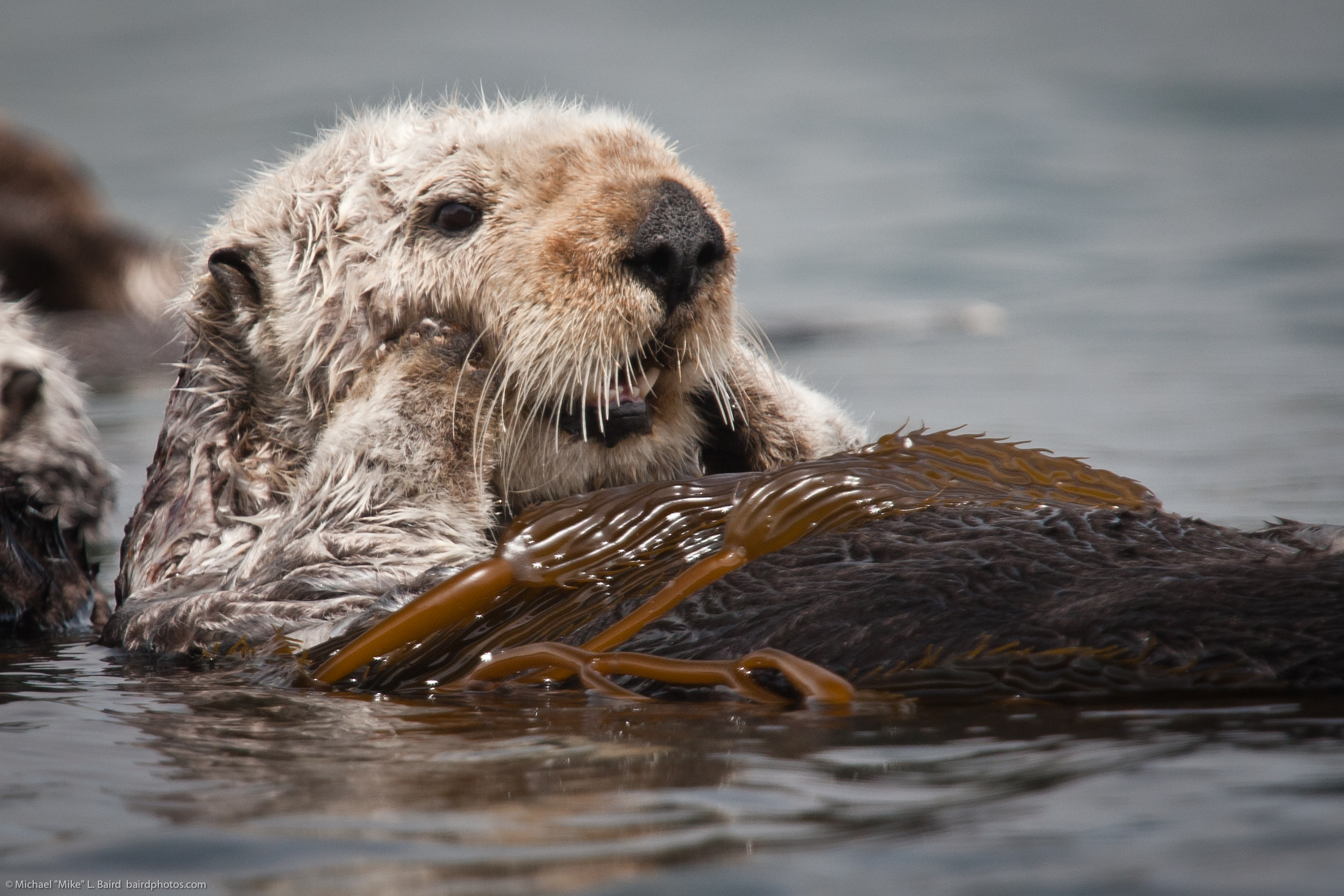
    Predators often become keystones by preventing one consumer from monopolizing resources. A familiar example is the sea otter. Otters eat sea urchins, and urchins graze kelp. Where otter predation keeps grazing pressure in check, underwater forests may persist and provide shelter, nursery space, and food for many other organisms. NOAA explains this otter–urchin–kelp connection, while newer long-term research shows that its strength varies among locations.

    This chain of indirect effects is called a trophic cascade. The predator affects herbivores directly and plants indirectly; those plant changes then influence fish, invertebrates, birds, carbon storage, shoreline exposure, and other processes. A cascade is not a simple guarantee. A recent 30-year analysis archived by NOAA found a classic otter-driven kelp recovery off Vancouver Island but a more muted response around San Nicolas Island. Context decides how the same interaction unfolds.

    Ecosystem engineers can be keystones

    Some keystone animals reshape habitat rather than controlling prey. The North American beaver cuts vegetation, builds dams, slows water, and creates ponds and wetlands. Those changes can alter sediment, temperature, groundwater, plant communities, and habitat for fish, amphibians, insects, birds, and mammals. The National Park Service describes beavers as ecosystem engineers because their structures create conditions used by entire biological communities.

    Not every ecosystem engineer is necessarily a keystone, and not every keystone is an engineer. The terms answer different questions. “Engineer” describes how an organism changes the physical environment. “Keystone” describes how disproportionate its total ecological influence is. A beaver can qualify as both where its dams control the availability of wetland habitat.

    Other kinds of keystone roles

    Keystone mutualists provide resources or services that many partners need. A pollinator may become crucial where numerous plants depend on it, while a fruiting tree can sustain animals during a seasonal food shortage. Keystone prey support predators and buffer predation across a community. Disease hosts, seed dispersers, scavengers, and burrowing animals can also have disproportionate effects.

    The category is therefore broader than famous large predators. Size is irrelevant. A sea star, insect, rodent, or reef-building invertebrate may exert more structural influence than a much larger animal. What matters is the web of consequences that follows when its function changes.

    How scientists identify a keystone

    Researchers begin by mapping interactions: who eats whom, who modifies habitat, which species provide scarce resources, and when those links operate. They may use controlled removal or exclusion experiments, natural population crashes, reintroductions, long-term monitoring, diet evidence, and models. Strong evidence connects the focal species to measurable community changes and rules out plausible alternatives.

    Abundance alone can mislead. A dominant species has large effects partly because it is common or contributes much biomass. A keystone produces a large effect relative to its abundance. The same species may shift between these descriptions as populations and environments change. Good studies report location, period, community response, and uncertainty instead of applying the term as a permanent badge.

    Why keystone status matters for conservation

    Protecting a keystone can benefit many connected species, but it is not a shortcut that replaces habitat conservation. An otter cannot maintain kelp if warming, pollution, or disease overwhelms the system. A beaver cannot create healthy wetlands where water is entirely diverted or where conflict leads to constant removal. The related African savanna predator guide shows how these interactions work in another system. Conservation must protect ecological processes, migration routes, prey, vegetation, water, and space as well as the focal animal.

    Keystone knowledge can still guide priorities. It helps managers anticipate indirect effects, choose restoration partners, and monitor whether a community is recovering function rather than merely adding individuals. It also warns against removing predators or engineers because their immediate impact seems inconvenient. The consequences may spread far beyond the first interaction.

    How to use the term carefully

    “Keystone species” is useful when it summarizes tested ecological influence. It becomes misleading when used as a synonym for iconic, rare, beneficial, or culturally important. Those qualities deserve recognition on their own terms. Ask three questions: What mechanism links the species to the community? What evidence shows a disproportionate effect? Under which ecological conditions does that effect occur?

    The best answer is rarely a universal ranking of nature’s most important animals. Ecosystems are networks, and keystone species reveal particular points where those networks are unusually sensitive. Studying them shows how indirect relationships can connect a predator to a forest, a dam-building mammal to a wetland, or a small sea star to the diversity of an entire rocky shore.

    Frequently asked questions

    Is a keystone species always a predator?

    No. Predators can be keystones, but habitat engineers, mutualists, prey, seed dispersers, scavengers, and other organisms may also have disproportionate ecological effects.

    Does keystone mean endangered?

    No. Keystone describes ecological influence, while endangered describes extinction risk. A species can be both, either one, or neither.

    Can the same animal be a keystone everywhere it lives?

    Not necessarily. Food webs, climate, habitat, competitors, and human pressures vary, so a strong keystone effect in one place may be weaker or work differently elsewhere.

    How do scientists prove that a species is a keystone?

    They combine removal or exclusion experiments, natural changes, reintroductions, long-term monitoring, diet data, and models to connect the species with community-wide effects.

    Sources

  • How Animals Survive Extreme Desert Heat

    How Animals Survive Extreme Desert Heat

    Extreme desert heat is not one problem with one solution. An animal must keep its body within a workable temperature range while limiting water loss, finding food and avoiding predators. Desert species solve those demands through combinations of behavior, body form and physiology. A burrow may cut heat exposure before a specialized kidney saves a drop of water; nocturnal activity may make pale fur less important. The best way to understand desert survival is as a layered system rather than a list of isolated tricks.

    Timing activity around the heat

    For many desert animals, the simplest way to survive midday heat is to avoid it. Rodents, foxes, bats, owls and numerous reptiles become active after sunset, when air and ground temperatures fall. Others are crepuscular, concentrating movement near dawn and dusk. The National Park Service notes that some reptiles shift schedules seasonally: daytime activity can work during mild months, while summer activity moves toward twilight.

    Changing time also changes risk. Night offers cooler conditions but requires sensitive hearing, smell or low-light vision. Dawn and dusk may reduce heat load while leaving enough light to find food. A fennec fox, for example, combines nocturnal habits with shelter and anatomy rather than relying on large ears alone.

    Burrows create a safer climate

    Air temperature measured in open sun does not describe every place available to an animal. Soil, rock fissures, shade and deep burrows form microclimates with smaller and slower temperature swings. Small mammals can plug burrow entrances against hot, dry air. Reptiles retreat below ground when surface conditions approach dangerous levels, then move toward the entrance as evening cooling begins.

    USGS research on desert tortoises shows that shelter use is central to their thermal ecology. A tortoise can spend much of the hottest or driest period inactive, lowering energy and water demands until conditions improve. Spadefoot toads take the same principle further by remaining underground for long intervals and emerging rapidly when rain creates brief breeding pools. The Mojave Desert Tortoise profile explains how this living species uses burrows, rainfall and water storage in its native range.

    Moving heat into the environment

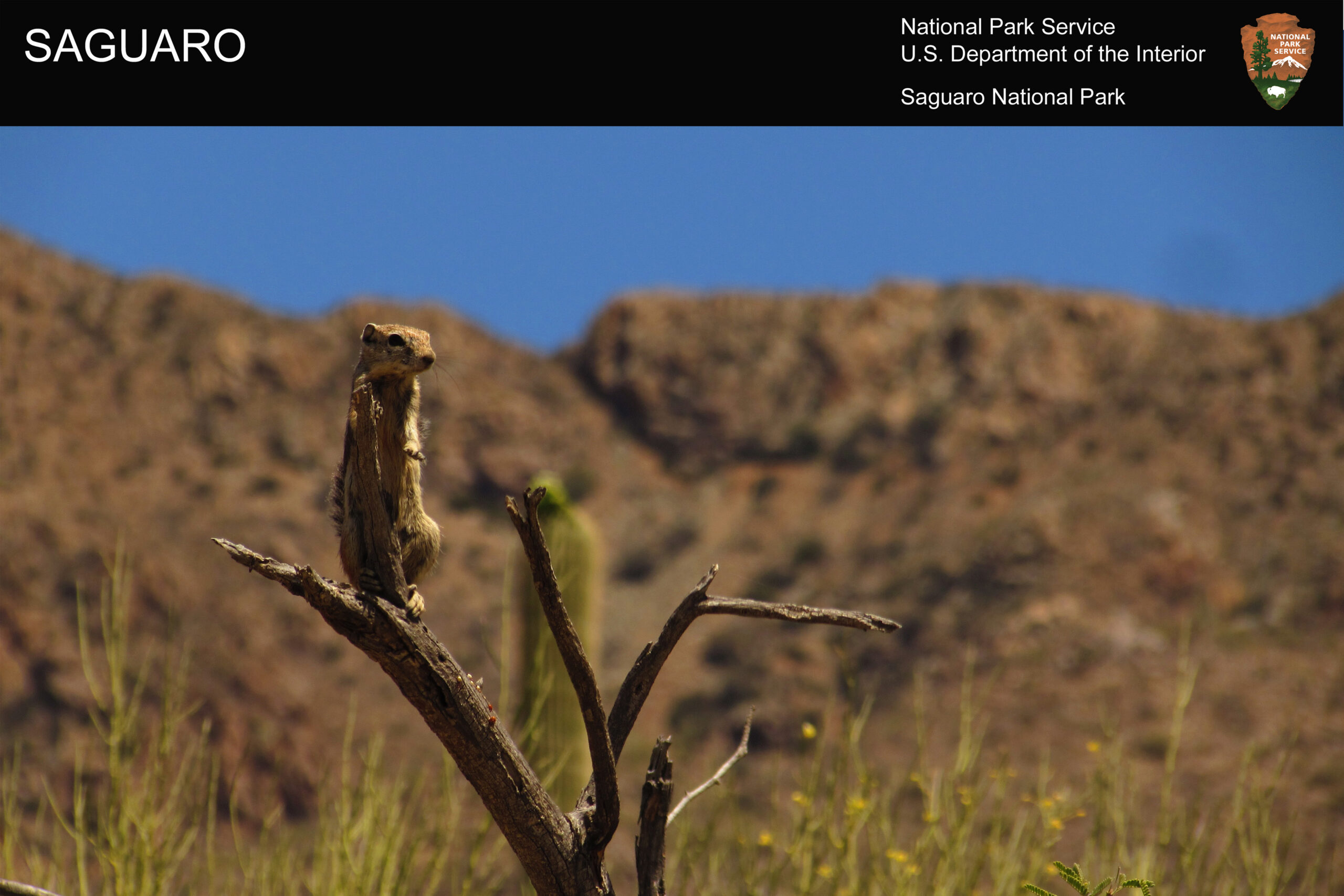
    Animals exchange heat through radiation, conduction, convection and evaporation. Long ears or limbs can increase surface area for dry heat loss when the surrounding air is cooler than the body. Pale surfaces may absorb less solar radiation, though color also serves camouflage and cannot be treated as a universal rule. An antelope ground squirrel may flatten against cooler shaded soil to conduct heat away and hold its tail above the back as a portable sunshade.

    Large animals face a different balance. Body mass changes temperature more slowly, which can buffer short peaks but makes stored heat harder to release. The camel tolerates controlled changes in body temperature and uses behavior, insulation and efficient water management together. It does not simply “store water in its hump”; the hump stores fat.

    Saving water inside the body

    Evaporation cools effectively but costs water, so desert animals often limit sweating and panting until needed. Efficient kidneys produce concentrated urine, and dry feces recover additional water before waste leaves the body. Reptiles and birds excrete much nitrogen as uric acid, which can be eliminated with less water than dilute urea. Nasal passages can also reclaim moisture from exhaled air.

    Some rodents meet much of their requirement through metabolic water produced as food is processed. Seeds are not little water bottles, but their nutrients yield water during cellular respiration. This works only with tight control of losses, sheltered daytime rest and suitable food. Larger mammals often must travel to water or exploit moisture-rich plants, especially during drought.

    Food, fat and seasonal flexibility

    Desert food arrives unevenly. Rain can trigger insects, flowers and seeds, followed by long scarcity. Opportunistic diets help animals use whatever is briefly abundant. Fat reserves store energy, but carrying excess insulation or mass can also raise heat-management costs. Species differ in where fat is stored and how quickly it is mobilized.

    When conditions become too costly, some animals enter torpor or aestivation. Metabolism, movement and water loss fall while the animal waits in shelter. This is not an effortless pause: stored energy is finite, and an unusually long hot or dry period can outlast it. The strategy succeeds because it matches the normal timing of local seasons.

    Why one adaptation is never enough

    Features often described as single-purpose traits usually do several jobs. Large ears can release heat, detect predators and locate prey. Burrows buffer heat, conserve humidity and hide animals. Nocturnal behavior reduces solar exposure but also changes competition and predation. Even closely related animals can use different combinations depending on body size, diet and local desert conditions.

    The oryx and meerkat illustrate different scales of the same problem: a large grazer can tolerate heat and travel across open terrain, while a small social mammal relies heavily on burrows, timing and group vigilance. Calling both “desert adapted” describes an outcome, not a shared mechanism.

    Climate change tests the limits

    Adaptations evolved within ranges of heat, drought and seasonal timing. More frequent extremes can narrow safe activity windows, increase the distance between food and water, and raise the cost of reproduction. USGS work found desert tortoise water and energy use varied dramatically among seasons, sites and rainfall years. That variation shows flexibility, but it also shows dependence on climate patterns.

    Conservation therefore protects processes as well as animals. Burrow-ready soil, shade plants, connected travel routes, undisturbed springs and intact seasonal pools give animals the options their behavior requires. A species may possess excellent water-saving physiology and still decline if roads block movement or invasive plants change fire frequency.

    Frequently asked questions

    Why are many desert animals nocturnal?

    Night activity reduces exposure to intense sunlight and hot ground, lowering both heat gain and the water needed for evaporative cooling.

    How do desert animals get water?

    Depending on the species, water comes from drinking, moist food, prey and metabolic water produced while nutrients are processed.

    Do large ears always cool an animal?

    No. They can release heat when conditions permit, but the effect depends on blood flow, air temperature, wind and whether the animal is exposed to direct sun.

    Why are burrows cooler than the desert surface?

    Soil blocks solar radiation and changes temperature slowly, creating a buffered microclimate that can also retain more humidity.

    Can desert animals survive unlimited heat?

    No. Every species has physiological limits, and prolonged heat or drought can remove safe activity time, food, water and shelter faster than adaptations can compensate.

    Sources

  • Why Vultures Matter to Healthy Ecosystems

    Why Vultures Matter to Healthy Ecosystems

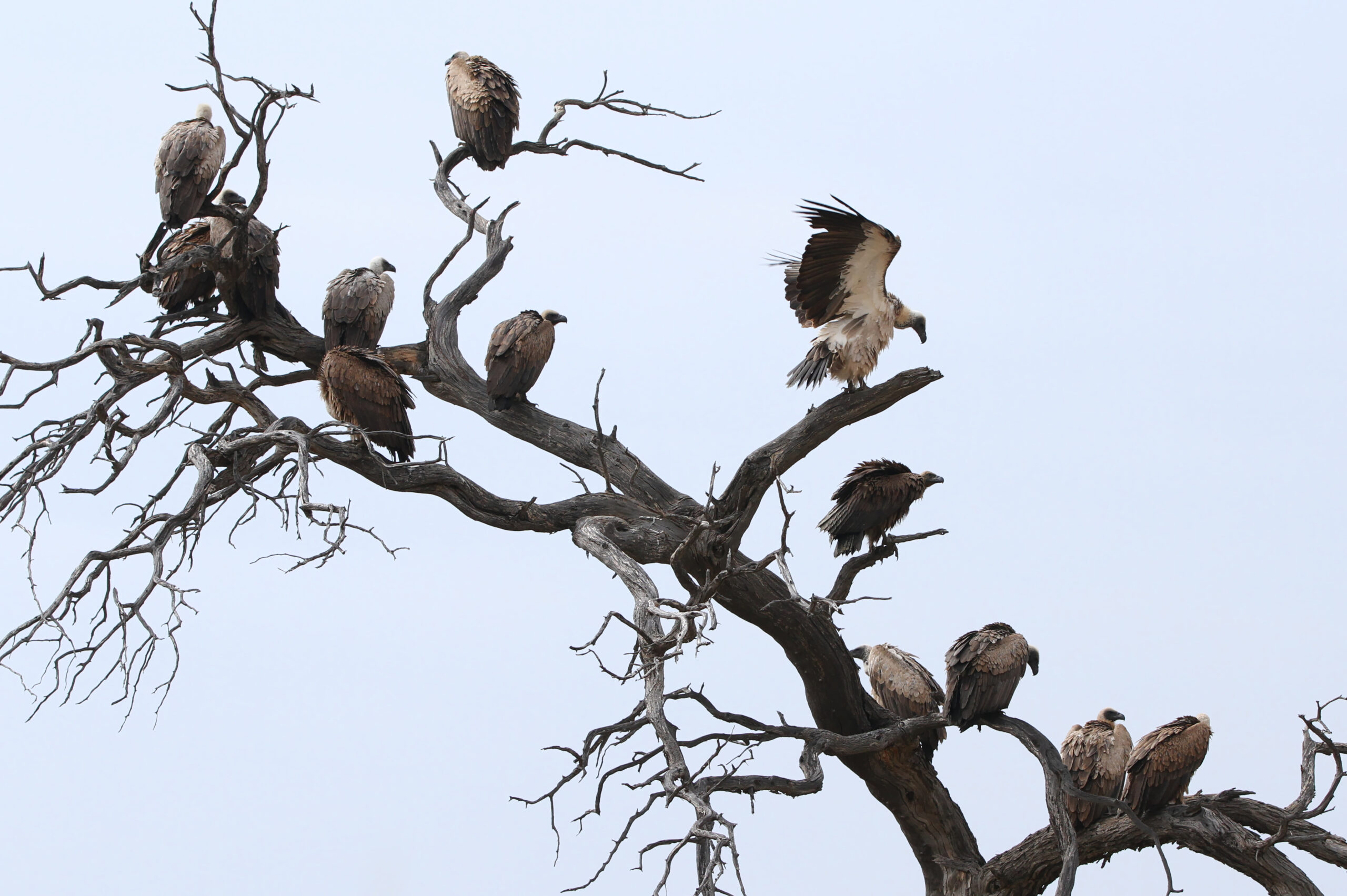
    Vultures turn a dangerous biological problem into a public service. A large carcass left in warm weather can feed microbes, attract rats and feral dogs, and remain a source of contamination for days. Vultures often find it quickly, gather in numbers and remove much of the soft tissue before slower scavengers arrive. That work supports nutrient cycling, limits opportunities for some disease agents and helps keep pastoral and wild landscapes clean.

    Specialists built around carrion

    Most vultures are obligate or near-obligate scavengers: carrion is the core of their diet rather than an occasional meal. Broad wings let many species search enormous areas with relatively little energy. Keen eyesight helps Old World vultures watch the ground and one another, while New World species combine vision with, in some cases, an exceptional sense of smell. Once a carcass is found, species with different bill shapes and body sizes can open hide, pull muscle, take scraps or clean material close to bone.

    This division of work explains why a diverse scavenger community can process a carcass more completely than one species alone. It also separates vultures from similarly named birds such as the Vulturine Guineafowl, a living ground-feeding gamebird whose bare head only resembles that of a vulture.

    Rapid removal changes the disease landscape

    Carrion is not automatically a disease outbreak, and vultures should not be credited with preventing every infection. Their defensible contribution is more specific: fast consumption reduces the time and biomass available to microbes, insects and mammalian scavengers. Studies of scavenger communities show that when vultures are absent, carcasses can persist longer and attract more facultative scavengers such as dogs.

    That shift matters near villages and livestock. Free-ranging dogs and rats move between carcasses, waste and people, creating different routes of exposure. Vultures digest contaminated flesh without behaving like roaming mammalian reservoirs. Their extremely acidic digestive system and specialized gut community help them tolerate material that would sicken many other animals. The benefit comes from the whole process of finding, consuming and containing carrion, not from a claim that vultures sterilize a landscape.

    They recycle nutrients at landscape scale

    A dead animal contains nitrogen, phosphorus and other nutrients that must return to food webs. Decomposers, insects and vertebrate scavengers all participate. Vultures accelerate the vertebrate part of that transfer by converting carrion into living tissue, waste and movement. Because they may travel tens or hundreds of kilometres between roosts and feeding sites, they redistribute some nutrients rather than leaving all of them concentrated at one carcass.

    This role links animal death to plant growth and future consumers. It is difficult to assign a single universal value because climate, carcass size, scavenger diversity and land use differ. The sound conclusion is that vultures are important members of a broader decomposition network, and that losing them changes both the rate and the pathway by which organic matter is processed.

    Wildlife, livestock and people share the benefit

    Vultures work in national parks, rangelands, farms and towns. In wildlife systems they clean the remains of natural mortality and predator kills. In pastoral regions they remove some livestock carcasses where formal collection is limited. That service can reduce disposal costs and the time carcasses remain accessible to dogs and other scavengers.

    A 2025 BirdLife assessment estimated that sanitation and pest-control services supplied by vultures in Botswana, Zambia and Zimbabwe were worth about US$1.8 billion each year. Such valuations depend on stated assumptions and should not be treated as a worldwide price tag. They are useful because they make visible work that markets usually ignore: carcass removal, avoided pest pressure and cleaner shared environments.

    What happens when vultures disappear

    South Asia supplied a severe natural experiment. Populations of several Gyps vultures collapsed after birds fed on livestock treated with the veterinary anti-inflammatory drug diclofenac. Even tiny residues could cause fatal kidney failure. With far fewer vultures, carcasses were available longer to other scavengers, and researchers documented ecological and public-health consequences associated with the altered system.

    Replacement is incomplete because not every scavenger performs the same job. A dog, jackal, crow or insect can eat carrion, but it differs in travel, feeding rate, disease ecology and contact with people. Recent field experiments in western Ecuador likewise found that facultative scavengers did not fully compensate for the loss of vultures. Healthy ecosystems need functional diversity rather than the assumption that any carrion eater is interchangeable.

    Poisoning creates the greatest immediate danger

    The international Vulture Multi-species Action Plan identifies poisoning as the greatest overall threat. Some birds die after feeding on livestock carcasses laced with poison to kill predators. Others are deliberately targeted for illegal trade or are poisoned by poachers who want to prevent circling vultures from revealing a dead animal. Veterinary drugs unsafe for scavenging birds remain a risk where regulation and enforcement are weak.

    Vultures also collide with or are electrocuted by power infrastructure, lose nesting and foraging habitat, and suffer disturbance or direct persecution. Their life history makes recovery slow. Many species mature late, raise only one chick in a breeding attempt and depend on high adult survival. A poisoning event that kills dozens or hundreds of adults can erase years of reproduction.

    Conservation must keep food both safe and available

    Effective action starts by removing the source of mortality. Governments can restrict veterinary drugs known to kill vultures and promote tested alternatives. Livestock owners and wildlife managers can prevent retaliatory poisoning through better husbandry, rapid response to predator conflict and enforcement against poisoned bait. Power companies can redesign dangerous poles and place new lines away from heavily used flight routes.

    Protected nesting cliffs, tall trees and undisturbed breeding areas remain essential, but a nest reserve alone cannot protect a bird that forages far outside it. Programs therefore monitor movements, investigate deaths and work across borders. Carefully managed supplementary feeding sites can provide safe carcasses and support monitoring, although they require veterinary screening and cannot replace a functioning landscape. Wider savanna conservation also depends on understanding predators, prey and scavengers together, as described in How Large Predators Shape the African Savanna.

    Why protecting vultures protects an ecological process

    Vultures are sometimes judged by appearance or by their association with death. Their ecological role points in the opposite direction. They keep energy moving through food webs, rapidly reduce exposed animal remains and limit opportunities for some competing scavengers and microbes. Communities also value them through tourism, cultural traditions and the practical cleanliness they provide.

    Protecting vultures therefore preserves more than a list of species. It protects a fast, mobile carcass-disposal system that no machine or substitute animal reproduces across an entire landscape. Their decline is visible in empty skies, but its deeper cost appears on the ground, where carcasses persist and ecological relationships reorganize.

    Frequently asked questions

    Why are vultures important to ecosystems?

    They rapidly consume carrion, recycle nutrients and reduce the amount of animal tissue available to microbes and mammalian scavengers such as feral dogs and rats.

    Do vultures spread disease?

    Vultures usually reduce exposure by removing carcasses quickly. Their highly acidic digestive system destroys many ingested pathogens, although no species can prevent every disease.

    What happens when vulture populations decline?

    Carcasses can persist longer and attract more facultative scavengers. Because those animals differ in feeding behavior and contact with people, they do not fully replace the ecological service vultures provide.

    What is the biggest threat to vultures?

    Poisoning is the greatest overall threat, including poisoned predator bait, unsafe veterinary drugs, illegal wildlife trade and deliberate poisoning connected with poaching.

    How can people help vultures?

    Support bans on toxic veterinary drugs, prevent poisoned bait, report wildlife poisoning, protect nests, improve dangerous power infrastructure and back conservation groups that monitor vulture populations.

    Sources

  • How Coral Reefs Support Animal Diversity

    Coral reefs support extraordinary animal diversity because living corals build a three-dimensional habitat in places where the surrounding tropical ocean may contain relatively few nutrients. A reef is both a biological community and a physical structure. Its ledges, holes, branches, sand patches and outer slopes give animals places to feed, hide, reproduce and grow. NOAA estimates that roughly one quarter of marine species occur in, on or around coral reefs even though reefs occupy only a small part of the ocean.

    Corals create habitat as living animals

    Reef-building corals are colonies of small animals called polyps. Each polyp secretes calcium carbonate beneath itself. Over many generations, the accumulated skeletons form hard frameworks that later corals continue to cover and enlarge. Waves, storms, grazing animals and chemical processes reshape that framework, producing a varied seascape rather than a smooth wall.

    This structural complexity is the foundation of reef diversity. Narrow crevices shelter small crustaceans and juvenile fish from larger predators. Overhangs offer daytime refuge to nocturnal animals. Exposed surfaces support sponges, molluscs and other invertebrates, while sand pockets and rubble favor different burrowers. A single reef therefore contains many microhabitats, each with its own combinations of light, current, temperature and risk.

    Sunlight powers the shallow reef food web

    Many shallow-water reef corals live in partnership with microscopic algae commonly called zooxanthellae. The algae photosynthesize inside coral tissues and transfer much of the resulting energy-rich material to their hosts. Corals provide a protected place to live and supply compounds the algae can reuse. This partnership helps reef-building corals grow in clear tropical waters where dissolved nutrients are often scarce.

    Energy moves through many other routes as well. Phytoplankton and zooplankton arrive with currents. Seagrass beds, mangroves and open water supply food or animals that move onto reefs. Coral mucus, waste and dead material are recycled by microbes, detritivores and filter feeders. These overlapping pathways allow numerous feeding strategies to coexist, from tiny plankton-catching polyps to large predatory fishes.

    Reef architecture creates nurseries and refuges

    Young animals face different dangers and need different spaces from adults. Branching corals and tight rubble provide shelter that large predators cannot easily enter. Lagoons and shallow reef flats can offer warm, food-rich nursery habitat, while deeper slopes support animals adapted to stronger currents or lower light. As animals grow, many shift between these zones.

    NOAA describes reefs as sources of food, shelter, reproduction sites and nursery grounds. This does not mean every reef species spends its entire life on one coral head. Some fishes feed over reefs at one time of day and shelter elsewhere at another. Sea turtles, sharks and rays may visit reefs while also using seagrass beds, oceanic water or sandy bottoms. The reef functions as one important part of a wider connected landscape.

    Specialization lets many species share limited space

    Diversity increases when species divide resources. Some fishes pick plankton from the water column, while others scrape algae, crush hard-shelled prey, sift sand or hunt after dark. Closely related species may favor different depths, coral shapes or prey sizes. Activity at different times also reduces direct competition: animals hidden during daylight emerge at night, when another group retreats into crevices.

    Body shapes often reflect these roles. Laterally compressed fishes can turn through branching coral, elongated animals can investigate holes, and strong jaws can remove algae or break shells. The bright Yellow Tang is one example of a reef-associated grazer. Grazing fishes help keep fast-growing algae from occupying every available surface, leaving room where young corals and other attached organisms can settle.

    Partnerships and competition shape the community

    Reef animals do more than occupy the habitat; they continually modify it. Parrotfishes bite reef surfaces while feeding and help create carbonate sand. Cleaner fishes and shrimps remove parasites from visiting clients. Small crabs and shrimps can defend corals from predators, while some gobies remove harmful seaweed. These relationships can benefit both partners and add new ecological roles to the community.

    Competition is equally important. Corals, algae and sponges compete for space and light. Predators influence which prey species become abundant, and grazers change the balance between algae and corals. A healthy reef is therefore dynamic. Diversity emerges from construction, feeding, defense, predation, cooperation and disturbance operating together rather than from coral structure alone.

    Reefs depend on neighboring habitats

    Mangroves, seagrass meadows, sandy bottoms and deep water exchange animals and nutrients with reefs. Juvenile fishes may grow among mangrove roots or seagrass blades before joining adult populations on nearby reefs. Mobile predators travel between habitats, and currents carry larvae across much greater distances. Protecting an isolated patch of coral while degrading its nursery or feeding grounds can therefore weaken the whole system.

    The Great Barrier Reef illustrates this scale of connection. Its wider marine park includes thousands of reefs alongside islands, seagrass beds and mangroves. The Great Barrier Reef Marine Park Authority reports 1,625 fish species, more than 3,000 mollusc species and 630 echinoderm species, as well as marine turtles, sea snakes, sharks and rays. The Green Sea Turtle, for example, may use reef waters while relying heavily on other coastal feeding habitats.

    Disturbance can unravel several layers at once

    Corals can recover from some storms and local damage, but repeated or widespread stress reduces the time available for recovery. Extreme heat can disrupt the partnership between corals and their internal algae, causing bleaching. Prolonged bleaching can lead to coral death and the loss of complex living cover. Ocean acidification makes calcification harder, while pollution, sediment, disease, destructive fishing and unsustainable harvest add pressure.

    When branching and table corals disappear, the reef surface often becomes flatter. Animals that require particular crevices or live coral may decline even before the entire reef erodes. Food webs can also shift if herbivores, predators or key invertebrates are removed. Conservation consequently needs both global action on climate change and local action that improves water quality, protects herbivores, limits habitat damage and maintains connections among reefs and adjacent habitats.

    Why reef diversity matters beyond species counts

    A long species list shows biological richness, but ecological variety is just as important. Species perform different jobs: building skeletons, grazing algae, filtering water, recycling nutrients, moving seeds or larvae, and controlling prey. When several species perform similar functions in different conditions, the community may be better able to withstand a disturbance. Losing entire functional groups can make recovery much harder.

    Monitoring therefore combines coral cover with measures of fish abundance, invertebrate communities, recruitment, disease and habitat structure. Scientists also compare reefs through time rather than assuming that one snapshot defines health. Diversity is both the result of a complex habitat and part of the process that keeps that habitat working.

    Frequently asked questions

    Are corals plants or animals?

    Corals are animals related to sea anemones. Many shallow reef-building corals live with photosynthetic algae inside their tissues, which is why sunlight is so important to them.

    Why do coral reefs contain so many animal species?

    Reefs combine abundant structural shelter, several depth and current zones, connected coastal habitats and many food sources. Species divide these resources by diet, location, body size and time of activity.

    Do all reef animals live on coral for their whole lives?

    No. Many animals move between reefs, seagrass beds, mangroves, sandy bottoms and open water as they grow, feed or reproduce.

    How do grazing fish help coral reefs?

    Grazers consume algae that can otherwise dominate open surfaces. Their feeding can preserve space where young corals and other attached organisms settle.

    What happens to animals when a reef loses living coral?

    Effects vary by species. Animals that depend on live coral or complex branches may decline quickly, while others persist longer. Continued erosion eventually removes crevices and reduces shelter for many species.

    Sources

  • How Monarch Butterflies Navigate Migration

    Each autumn, millions of monarch butterflies in eastern North America orient generally southwest and travel toward high-elevation forests in central Mexico. Some begin in southern Canada and cover as much as 4,000 kilometres, reaching a place they have never visited. They do not follow experienced parents. Instead, experiments show that migrating monarchs combine a time-compensated sun compass with circadian clocks in their antennae, while a light-dependent magnetic compass can help when directional sunlight is unavailable. Wind, temperature, landscape and inherited migratory state shape what happens along the route.

    The autumn generation is built for a different task

    Spring and summer monarch generations reproduce soon after becoming adults and usually live only a few weeks. Late-summer butterflies enter reproductive diapause, delaying mating while they migrate and overwinter. This long-lived generation stores fat from flower nectar and can survive six to nine months. The physiological switch gives one butterfly time to fly south, spend winter in Mexico and begin the northward return the following spring.

    No individual completes the full annual round trip. The overwintering generation moves north in spring, mates and lays eggs. Its descendants continue through the United States and Canada over several short-lived generations. Months later, a newly emerged autumn generation reverses direction and flies toward Mexico without having learned the route from an older migrant. The Monarch Butterfly profile places this journey within the species’ full life cycle, milkweed dependence and conservation status.

    A sun compass gives direction

    Flight-simulator experiments established that autumn monarchs use the sun’s horizontal position, or azimuth, as a compass cue. A tethered butterfly can fly freely around a circular arena while instruments record its preferred direction. Under normal daylight, migrants tend to hold a southwesterly bearing. When researchers shift the butterfly’s internal clock by several hours, its chosen direction shifts in the predicted way.

    This result reveals a time-compensated sun compass. The sun moves from east to west during the day, so simply keeping it on one side would curve a route. Monarchs compare solar position with internal time and continually correct their bearing. Polarized light and other patterns in the sky may add directional information, but the moving sun and clock relationship is central to the best-supported model.

    The antennae help keep time

    Scientists once assumed that the clock controlling the compass sat only in the brain. A 2009 experiment produced a more surprising answer. Monarchs whose antennae were removed could still fly, but they no longer maintained the normal migratory direction. Butterflies with intact antennae oriented correctly, and molecular analysis showed functioning circadian clocks in the antennae.

    Covering the antennae with opaque paint disrupted normal orientation, while transparent paint did not, showing that light reaching the antennae matters for clock calibration. Neural processing still occurs in the brain, including the central complex associated with compass information. The evidence supports a distributed system: the eyes and brain process skylight direction, while light-sensitive antennal clocks supply timing needed to compensate for the sun’s daily movement.

    A magnetic compass can work under cloud

    Monarchs sometimes maintain an appropriate fall direction when thick cloud hides the sun and blue sky. Magnetic-field experiments published in 2014 showed that migrants possess an inclination compass. This type of compass reads the angle at which Earth’s magnetic field meets the surface rather than distinguishing magnetic north from south in the way a handheld compass does. Rotating the experimental magnetic field shifted butterfly orientation.

    The response required ultraviolet-A or blue light between about 380 and 420 nanometres, and the antennae appeared important for the light-sensitive magnetic mechanism. Researchers therefore describe magnetism as an aid or backup to the primary sun compass, especially when directional skylight cues are missing. It should not be portrayed as a complete magnetic map that guides every turn from Canada to one Mexican tree.

    A compass is not the same as a detailed map

    Orientation and true navigation are different abilities. A compass can maintain an inherited direction; true navigation requires knowing position relative to a destination and correcting after displacement to an unfamiliar place. A large displacement experiment and decades of tag recoveries found that monarchs did not consistently compensate like animals with a precise continent-scale map. The results fit a vector strategy during much of the journey: fly in a broadly inherited direction, modified by environmental conditions.

    That does not make the migration simple. Migrants must adjust to wind, avoid unsuitable conditions, refuel and concentrate toward a limited mountain region. Large-scale topography may help narrow the flow of butterflies as they approach Mexico. Local cues could become more important near overwintering areas, but the evidence does not yet justify a claim that monarchs memorize one unique route or carry exact coordinates for a forest they have never seen.

    Weather and landscape reshape the route

    Monarchs need body temperatures high enough for powered flight, so cold, rain and strong headwinds can stop a migration. On favorable days they alternate flapping with gliding and may use rising air to reduce energy cost. Winds can speed progress, produce detours or push butterflies away from the preferred bearing. A heading recorded at one moment is therefore not the same as the path traced over an entire day.

    Flower-rich stopovers provide nectar that becomes lipid fuel. Roosts offer sheltered places where migrants gather overnight. Drought can reduce flowers; mowing or herbicide use can remove nectar and milkweed; storms can kill concentrated migrants. Conservation of a moving animal requires a connected seasonal network rather than one reserve. Protecting diverse native blooms along the corridor supports monarchs as well as other butterflies, including species with very different life histories such as Queen Alexandra’s Birdwing.

    Scientists separate mechanisms with controlled tests

    Flight simulators isolate directional choices while clocks, light spectra and magnetic fields are altered. Tagging links a release point to a later recovery and reveals timing, distance and broad routes. Stable-isotope chemistry can estimate where a butterfly developed because regional rainfall patterns leave geographic signals in wing tissue. Weather models help distinguish active orientation from passive wind transport.

    Every method has limits. A tethered butterfly does not experience a complete free flight, tag recovery is uneven across the continent, and chemical assignments describe regions rather than exact birthplaces. Strong conclusions come from agreement among independent approaches. The sun-compass model is supported by clock-shift experiments, antennal manipulations, molecular clocks and neural recordings. Magnetic orientation has controlled experimental support but operates under specific light conditions.

    Navigation and conservation are connected

    The migratory system depends on more than an extraordinary compass. Caterpillars require milkweed, adults require nectar across many months, migrants need usable weather windows and overwintering colonies depend on suitable forest microclimate. Remove enough links and a butterfly can orient correctly yet still fail to arrive or survive.

    Useful action follows the biology: grow locally native milkweeds and pesticide-free nectar plants, protect flowering habitat through the migration season, avoid mass releases that may spread disease, and support monitoring and overwintering-forest conservation. Navigation research explains how a monarch holds course; habitat conservation determines whether that course still contains food, shelter and a safe destination.

    Frequently asked questions

    How do monarch butterflies know which way to migrate?

    Autumn migrants mainly use a time-compensated sun compass, comparing the sun’s changing position with an internal circadian clock to maintain a generally southwesterly heading.

    Why are monarch butterfly antennae important for navigation?

    The antennae contain light-sensitive circadian clocks that provide timing information for the sun compass. Removing or blocking light from them disrupts normal migratory orientation.

    Can monarch butterflies navigate on cloudy days?

    Experiments show that they can use a light-dependent inclination magnetic compass when directional sunlight is unavailable, although this is considered an aid rather than a complete map.

    Does one monarch complete the whole migration cycle?

    No. Several short-lived generations move north in spring and summer, while one long-lived autumn generation flies south, overwinters and begins the return.

    Have migrating monarchs been to Mexico before?

    The autumn migrants reaching Mexico are usually on their first journey. Their direction is inherited and guided by sensory systems rather than learned by following experienced adults.

    Sources

  • Why Sea Turtles Return to Nesting Beaches

    A female sea turtle may cross hundreds or thousands of kilometres of ocean and later nest in the same broad coastal region where she hatched decades earlier. Biologists call this pattern natal homing or natal philopatry. It is not a perfect return to one remembered patch of sand, and turtles sometimes colonize new beaches. Even so, tagging, genetics and navigation experiments show a powerful tendency to return to natal regions. The leading explanation combines a large-scale magnetic map with local environmental cues, allowing a turtle to approach the correct coast and then refine its destination.

    Natal homing connects a long life cycle

    Sea turtles begin life by crawling from a nest to the ocean. Juveniles may spend years moving through offshore and coastal habitats before adults migrate between feeding areas and breeding regions. In many populations, females then lay eggs near their region of origin. This return can occur after a long interval because sea turtles mature slowly and may not reproduce for decades.

    “Home” is best understood at the scale supported by evidence. Some turtles return to a particular island or short section of coast, while others nest within a wider rookery. Individuals may use different beaches in different nesting seasons or even within one season. Natal homing describes a strong tendency, not an infallible rule that every female reaches the exact place where her egg was buried.

    Genetics revealed the pattern before navigation was understood

    Female sea turtles pass mitochondrial DNA to their offspring. When females repeatedly return to natal nesting regions, lineages become concentrated at particular rookeries. Researchers have found this population structure in several species, providing evidence that nesting females do not mix randomly across all suitable beaches. Tagging and satellite tracking add direct records of adults returning to breeding regions after feeding elsewhere.

    Male movements are harder to study because males do not crawl ashore to nest. Genetic work nevertheless indicates that males can also show natal-region fidelity when returning to breed. The strength and geographic precision of homing vary among species and populations, so scientists avoid treating one well-studied loggerhead rookery as a universal model for every sea turtle.

    Earth’s magnetic field can provide a large-scale map

    Earth’s magnetic field differs from place to place. Two measurable features, field intensity and inclination angle, often form geographic gradients along coastlines. Laboratory experiments show that loggerhead hatchlings can distinguish magnetic fields representing different points on an ocean route and respond with directions that would help keep them within favorable currents. Juvenile green turtles exposed to simulated fields from locations north or south of their feeding area also oriented in homeward directions.

    The geomagnetic imprinting hypothesis proposes that young turtles learn magnetic characteristics associated with their natal region and later use a magnetic map to find it. A long-term analysis of loggerhead nesting in Florida found that nest distributions shifted in ways predicted by gradual changes in the magnetic field: nests became more concentrated where magnetic signatures converged and more dispersed where they diverged. This is strong evidence consistent with magnetic imprinting, although scientists have not identified every sensory and learning mechanism involved.

    Local cues may guide the final approach

    A magnetic signature is better suited to locating a coastal region than one exact nest site. Once nearby, turtles may combine magnetic information with waves, currents, odors, shoreline shape and other local cues. The relative importance of these signals remains an active research question. A turtle returning to an island faces a different navigational problem from one approaching a long north–south mainland coast.

    This layered explanation avoids claiming that turtles follow a single internal compass from start to finish. A compass supplies direction, while a map supplies position relative to a goal. Experienced adults may also update information during later nesting visits. Navigation can therefore involve inherited responses, early learning and information gained through repeated migrations.

    Why returning to a natal region can be useful

    A beach that successfully produced a hatchling has at least once provided workable sand, temperature, elevation and access to the sea. Returning to that region can reduce the risks of searching an enormous coastline for an untested site. Shared nesting destinations also bring adults into the same breeding system despite widely separated feeding grounds. Readers can connect this migration with the lives of the Green Sea Turtle and the ocean-spanning movements of the Leatherback Sea Turtle.

    Strict fidelity would also carry costs. Beaches erode, storms reshape shorelines and climate changes sand temperature and inundation risk. Rare “straying” to a different suitable beach allows new rookeries to form and can help a population respond when old habitat disappears. Researchers have documented sporadic loggerhead nesting that appears consistent with long-distance colonization, showing that natal homing leaves room for exploration.

    Homing shapes both conservation and risk

    Because breeding adults repeatedly depend on particular regions, losing one nesting area can damage a distinct population rather than being easily offset by an intact beach elsewhere. Coastal construction, hard shoreline armoring, vehicles, disturbance, egg collection and rising seas can reduce nesting success. Artificial light can disorient hatchlings and may disturb nesting females. Protection must cover the beach, nearshore water and migratory routes linking breeding and feeding grounds.

    Magnetic navigation also raises questions about human-made electromagnetic fields, although evidence for population-level effects from specific infrastructure remains incomplete. Conservation decisions should distinguish demonstrated threats from plausible mechanisms still being tested. The clearest actions are to protect dark, accessible beaches; reduce bycatch and pollution; manage human activity during nesting; and monitor each rookery over many years.

    Scientists test a journey they cannot watch continuously

    Researchers combine several methods because no single tool follows a turtle from hatching to first reproduction. Flipper tags and satellite transmitters reveal adult movements. Genetic markers connect animals at feeding grounds or breeding areas with likely source populations. Controlled magnetic-field experiments test whether turtles detect positional information, while long-term nest surveys reveal shifts across coastlines.

    Each method has limits. Tags record only marked animals, satellite devices operate for finite periods and hatchlings are too small for long deployments. Genetics reveals population relationships but not every decision made during a migration. Laboratory orientation demonstrates capacity under controlled conditions rather than reproducing an entire ocean crossing. Conclusions are strongest when experiments, tracking, genetics and field patterns point in the same direction.

    Frequently asked questions

    Do sea turtles return to the exact beach where they hatched?

    Many return to the same broad nesting region, and some show finer-scale fidelity, but the return is not always to one exact point. Precision varies among individuals, species and coastlines.

    How do sea turtles find their natal nesting region?

    The leading explanation is that they use Earth’s magnetic field as a large-scale map and combine it with local cues near the coast. The full sensory sequence is still being studied.

    Can sea turtles sense Earth’s magnetic field?

    Yes. Controlled experiments show that hatchling and juvenile sea turtles respond to magnetic field features associated with different geographic locations.

    Do male sea turtles also return to natal regions?

    Evidence from genetics and tracking indicates natal-region fidelity in males as well as females, although males are more difficult to observe because they do not come ashore to nest.

    Why do sea turtles sometimes nest somewhere new?

    Occasional straying allows colonization of suitable habitat and prevents natal homing from becoming absolute when storms, erosion or long-term environmental change alter old nesting areas.

    Sources

  • How Wolf Packs Work

    A wild wolf pack is usually a family, not a gang of unrelated animals locked in a constant contest for rank. The core is typically a breeding pair and their offspring from one or more years. Parents guide travel, reproduction and much of the group’s work because they are experienced adults raising their young. This family model explains wolf behavior more accurately than the popular image of an “alpha” winning leadership through repeated fights.

    Most packs begin as a family

    A pack often forms when two dispersing wolves pair, establish a territory and produce pups. If some young remain after their first year, the next litter joins older siblings and the family becomes larger. An unrelated wolf may sometimes join, and large packs can contain more than one breeding female, but those cases add variation to the family pattern rather than replacing it.

    Pack size changes throughout the year. Birth adds pups in spring, while mortality and dispersal reduce numbers. Prey size and abundance also matter because every additional member needs food. The International Wolf Center notes that packs may be small where prey is small and can exceed 20 wolves in parts of Alaska and northwestern Canada. Exceptional groups should not be treated as the standard everywhere.

    Why “alpha wolf” can mislead

    The classic alpha story grew partly from observations of unrelated captive wolves placed together. Those artificial groups had to negotiate unfamiliar relationships and often showed intense competition. Long-term field observations revealed a different pattern in free-ranging packs: the leading male and female are usually the parents, naturally senior to their dependent offspring.

    Wild wolves do show dominance and submission. Posture, tail position, facial expression and access to food can communicate status. The mistake is turning those interactions into a rigid ladder maintained mainly through violence. Biologist L. David Mech argued that “breeding male,” “breeding female” or simply “parents” usually describes the animals better. Leadership can also shift with the task rather than belonging to one permanent dictator.

    Work is shared rather than identical

    Pack members cooperate to defend territory, hunt, raise pups and protect food. Parents contribute heavily, but older offspring can help provision and guard younger siblings. Mech’s observations found a division of labor in which the female parent was especially important in pup care and defense, while the male parent often took a larger role in foraging, provisioning and associated travel. That is a tendency, not an inflexible rule.

    Age and experience affect decisions. Older wolves may know routes, prey behavior and territorial boundaries. A hungry animal may initiate movement, while another leads during a hunt. A pack can benefit from several capable adults rather than depending on a single leader for every decision. Loss of a breeding wolf can destabilize a group because that individual is a mate, parent and source of knowledge—not merely because a rank position becomes empty.

    Cooperative hunting has limits

    Several wolves can locate, test and pursue large prey more effectively than one wolf alone. Cooperation allows them to challenge animals much larger than themselves, defend a carcass and feed pups. Yet a bigger pack is not automatically better. More hunters may improve some parts of a chase while also creating more mouths to feed. Terrain, snow, prey age and condition, and the wolves’ experience all influence the outcome.

    Wolves do not use a single rehearsed formation. They assess moving prey, respond to openings and sometimes abandon an attempt. Hunts frequently fail. The family’s success depends on persistence and learning across many encounters. The Gray Wolf profile covers the species’ broader diet, range and physical adaptations, while pack structure explains how those abilities are coordinated socially.

    Pups are raised by more than their mother

    Pups are born in a den after a gestation of about 63 days. For the first weeks they depend closely on their mother. Other pack members bring food, often regurgitating meat as pups are weaned. They may also guard, play with and supervise young wolves. This shared care makes wolves cooperative breeders.

    As pups grow, the family may shift from the den to rendezvous sites where young animals remain while adults travel. By roughly seven or eight months, pups are close to adult size and begin moving more regularly with the pack. Their first year teaches them routes, signals, prey handling and the boundaries of relationships. Older siblings gain experience while helping the new litter.

    Dispersal creates new packs

    Young wolves do not all stay with their parents. Many leave between about one and several years of age, though timing varies. A disperser may travel alone across unfamiliar terrain, searching for a mate and vacant territory. This is a dangerous period involving roads, people, rival packs and uncertain food, but it is also how wolf populations exchange genes and establish new families.

    Dispersal makes pack membership fluid. One year’s large family may be smaller the next spring, then grow again after pups are born. A wolf’s departure is therefore not necessarily exile after losing a dominance fight. It is often a normal life-history step toward reproduction. Related families can occupy neighboring territories, but they still defend space and resources from one another.

    How wolves hold territory and stay connected

    Howls help separated members locate one another and can advertise occupation to neighboring packs. Scent marks add information along routes and boundaries. Direct encounters between packs can be dangerous, so long-distance signals may reduce some confrontations by showing that an area is defended.

    Within the family, wolves use howls, whines, growls, scent, touch and body posture. Greetings reinforce bonds after separation. Play lets young wolves practice movement and social limits. A lowered body or tucked tail can defuse tension. Communication helps coordinate a group whose members may spread out during travel or feeding rather than moving as a tight formation at all times.

    Pack structure changes with ecology and human pressure

    There is no universal pack size or territory size. Wolves living with abundant large prey may support different group sizes than wolves hunting smaller or scattered prey. Yellowstone packs have sometimes become unusually large and socially complex, while other populations commonly form smaller families. Geography, prey density, neighboring packs and disease all influence the pattern.

    Human-caused mortality can remove parents or experienced adults and alter age structure. Research in Denali found that breeding members can function as social glue, so losing one may affect reproduction and pack persistence. Conservation therefore concerns relationships as well as head counts. A population with the same number of wolves can function differently if stable families repeatedly lose adults.

    Frequently asked questions

    Is an alpha wolf the strongest wolf in the pack?

    In most wild packs, the leading male and female are the parents. Their position comes mainly from being experienced breeding adults, not from repeatedly fighting unrelated rivals for control.

    How many wolves live in a pack?

    Pack size varies with births, dispersal, mortality and prey. Many packs contain a breeding pair and several offspring, while some northern packs can exceed 20 members and exceptional groups grow larger.

    Does every wolf in a pack hunt?

    Participation varies with age, health and circumstances. Adults and older young may hunt and provision the family, while small pups remain at a den or rendezvous site under care.

    Why do young wolves leave their pack?

    Dispersal allows young adults to find unrelated mates, vacant territory and opportunities to form new packs. It is a normal part of wolf life rather than automatic punishment.

    Sources