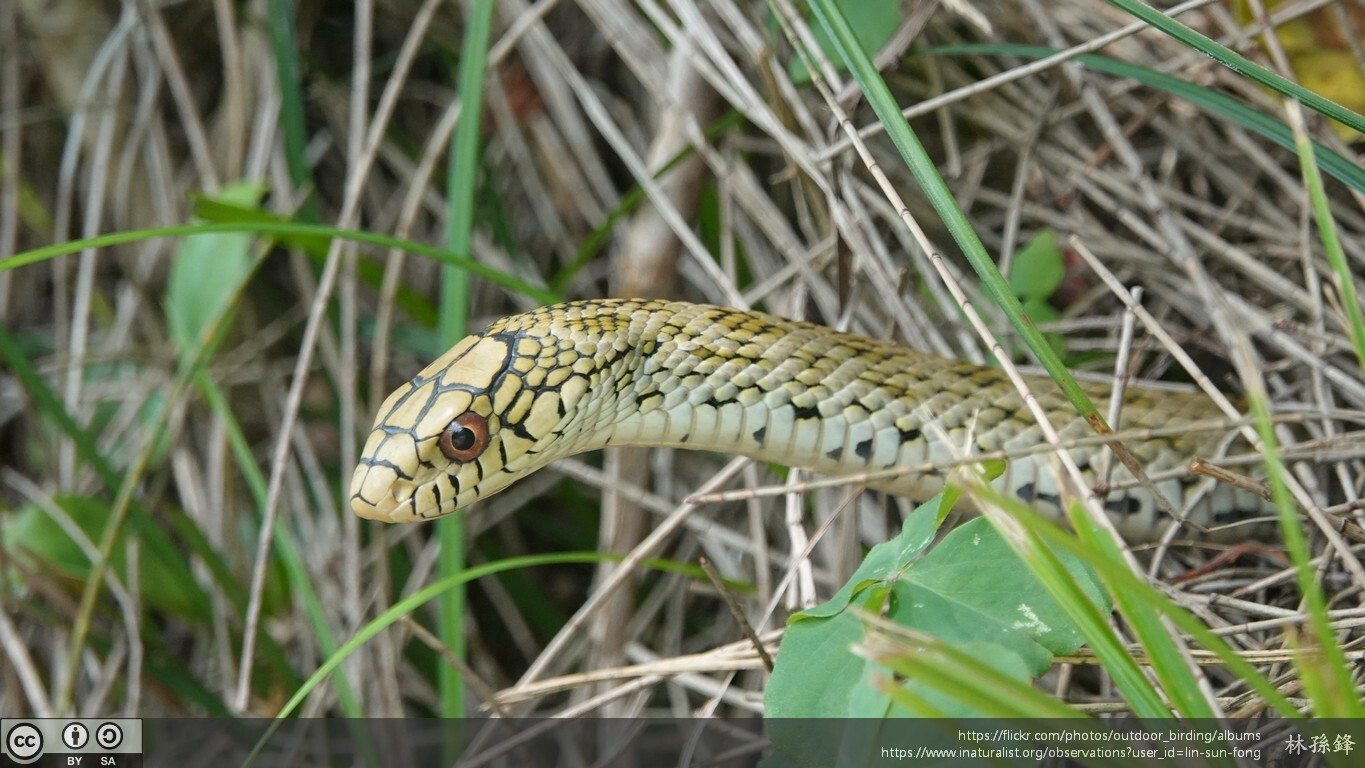
King Rat Snake (Elaphe carinata) is a living, nonvenomous colubrid native to parts of East Asia. It is also called the Taiwan stink snake because a threatened individual can release a powerful defensive musk. This guide separates well-supported biology from common assumptions and covers identification, range, habitat, diet, behavior, reproduction and conservation.
Identification
Adults are robust snakes with strongly keeled, rough-looking dorsal scales, large head shields and a mottled pattern that may combine brown, olive, black and pale marks. Dark edging on the head scales can form a crown-like pattern between the snout and eyes. Reliable field descriptions emphasize age-related color change more than a consistent visible difference between the sexes; juveniles are generally paler brown and more finely spotted than adults.
Identification should combine body shape, markings, size, voice or movement, and location. One feature by itself can overlap with a related animal, a juvenile, or an individual in unusual light.
Photographs are most useful when they preserve scale and show several diagnostic features. Handling or repositioning a wild king rat snake for identification can cause stress and is unnecessary.
Size and physical adaptations
King Rat Snake typically measures up to about 2.65 m in total length and weighs not reliably reported across the species. A reproductive study described adults to 170 cm snout-to-vent length, while a Taiwan national-park account reports total length to 265 cm. Those are different measurement methods and should not be combined as one typical value.
Its useful adaptations include strongly keeled scales, large ventral scales that provide traction, climbing ability, powerful constriction, defensive musk. These traits work together in the animal’s normal setting rather than serving as isolated curiosities.
Published measurements may use different methods, life stages or sample locations. Comparing figures responsibly means checking what was measured rather than selecting the largest number available.
Range and distribution
The species occurs in China, Taiwan, northern Vietnam and Japan’s Ryukyu Islands. The native range includes China, Taiwan, Vietnam, Japan.
A country-level map indicates broad distribution, not continuous occupation. Climate, elevation, water, vegetation, prey, breeding sites, barriers and survey effort all affect where records occur.
Records near the edge of the range deserve careful documentation because they may reflect natural movement, improved survey coverage, accidental transport or a genuine distribution change.
Habitat
King rat snakes use forests, scrub, grassland, farmland, plantations and the edges of villages, especially in lowlands and hilly country. Taiwan records extend from plains into lower and middle elevations, with local sources reporting occurrences below about 2,000 m.
They travel on the ground but can climb rock faces, shrubs and trees. Farms and settlement edges can offer rodents and other prey, while also exposing snakes to roads, deliberate killing and accidental encounters. Protecting a population therefore requires the feeding, shelter and breeding features that make a site usable, along with connections that allow movement.
Microhabitat matters. Shade, soil, current, moisture, shelter or host plants can determine whether a small area is usable even when the surrounding landscape appears suitable.
Diet and feeding
King Rat Snake is a carnivore. Important foods include rodents, birds and eggs, frogs, lizards, reptile eggs, other snakes. The snake subdues many prey by coiling around them before swallowing. Published observations document predation on other snakes, including venomous many-banded kraits and brown-spotted pitvipers, but such striking records do not mean every meal is another snake.
Diet changes with age, season, location and food supply. A dramatic prey record does not establish what most individuals eat most of the time; repeated field observations provide a stronger picture.
Feeding opportunities also create risk. An animal focused on prey may be less alert to predators, traffic or people, while contaminated prey can transfer pollutants through the food web.
Behavior and communication
Individuals may be active by day or night, depending on place and conditions. They move quickly, forage across several habitat layers and may stand their ground when cornered. A frightened snake can bite and release a strong-smelling secretion, but it does not inject venom.
Like other snakes, it samples airborne and surface chemicals with the tongue and vomeronasal system. Defensive posture, rapid movement, biting and musk communicate that the animal wants space. Behavior should be interpreted in context: alarm, courtship, feeding and temperature regulation can produce very different actions from the same animal.
Daily schedules are flexible responses, not rigid rules. Weather, breeding condition, disturbance, tides or food can move activity into a different part of the day.
Reproduction and development
This egg-laying species breeds seasonally, with eggs deposited in summer in documented populations. Taiwan natural-history accounts report 8–14 eggs, while research on eastern Chinese females found one clutch of 5–17 pliable-shelled eggs per breeding season. A Taiwan museum account reports incubation of roughly one month and hatchlings around 30 cm long, but temperature and moisture can alter incubation performance and hatchling traits.
Young animals face different risks and may use different microhabitats or food than adults. Breeding success depends on adult condition, suitable sites and the survival of offspring through vulnerable early stages.
Counts of eggs or young describe reproductive output, not the number expected to reach adulthood. Mortality is normally greatest during eggs, larval or juvenile stages.
Predators and ecological role
As a medium-to-large predator, it consumes rodents, amphibians, birds, lizards and snakes and can transfer energy between farmland, forest-edge and village habitats. Cannibalism means adults can also be predators of younger members of their own species. Documented or likely predators include Birds of prey, King Rat Snake.
This animal is both a consumer and a food source. Its influence comes through many repeated interactions, so ecological claims should be based on measured populations rather than assumptions drawn from appearance.
Predator and prey relationships differ among places. A species can be ecologically influential without being abundant everywhere, and its role can change across its range.
Relationship with people
The snake sometimes enters farms or buildings while following rodents, which can bring it close to people. It has historically been collected for food in parts of its range, and road traffic is a documented source of mortality for snakes in developed landscapes.
It is nonvenomous, but a large defensive individual can deliver a painful bite and strong musk. Do not handle, corner or attempt to identify a snake by provoking it; use local wildlife services when removal is necessary. Responsible observation means keeping an appropriate distance, avoiding capture or feeding, protecting habitat and following local wildlife or invasive-species guidance.
Wildlife guidance should come from the responsible local agency because collection rules, reporting requests and appropriate responses differ between native and introduced ranges.
Conservation
The Taiwan Biodiversity Network reports the King Rat Snake as Least Concern on both the international list and Taiwan’s 2024 national red list. The reported global trend is not established.
Important pressures include road mortality, deliberate killing, collection, habitat loss or fragmentation in developed landscapes. Global status can hide local decline or recovery, so current regional monitoring and habitat management remain necessary.
The most useful conservation action follows the documented pressure. Protecting breeding sites, reducing road deaths or limiting pollutants can require different tools in different populations.
Sources and further reading
- The Reptile Database — Elaphe carinata
- Integrated Taxonomic Information System — Elaphe carinata
- National Museum of Natural Science — Elaphe carinata
- Taiwan Encyclopedia of Life — Elaphe carinata
- Yangmingshan National Park — Taiwan Stink Snake
- Taiwan Biodiversity Network — Elaphe carinata status
- Ji et al. — clutch size and egg size in Elaphe carinata
- Herpetology Notes — predation on a brown-spotted pitviper