Blog

  • Norwegian Forest Cat

    Norwegian Forest Cat

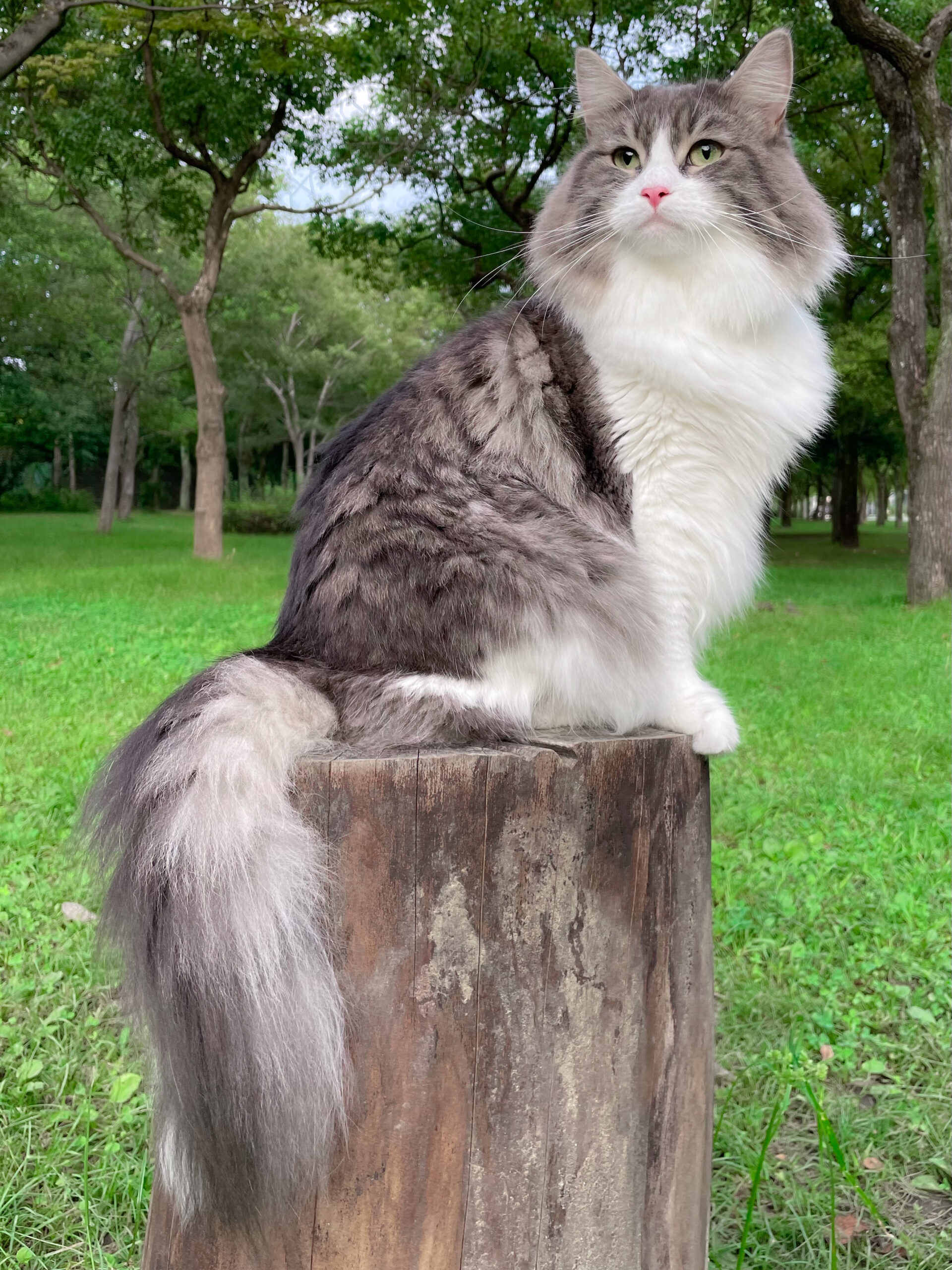
    The Norwegian Forest Cat is a large, athletic longhaired breed developed in Scandinavia. Its triangular head, straight profile, powerful hindquarters and seasonal double coat distinguish it from other fluffy cats. Breed registries describe these cats as intelligent, mild-mannered and interactive, but an individual cat’s personality still depends on genetics, early socialization, health and experience. This guide explains the daily work behind the dramatic coat and confident climbing ability, so families can judge whether the breed fits their home. For a near-hairless breed with very different skin and temperature-care needs, compare the Sphynx guide.

    Temperament and household fit

    Many Norwegian Forest Cats enjoy staying near their people without demanding constant carrying. They often follow household activity, investigate shelves and windows, and choose when to settle beside someone. TICA describes the breed as playful, loving and adaptable; that does not guarantee that every cat will be a lap cat or welcome every visitor. Let a new cat approach at its own pace and provide a quiet room during the first days.

    A calm introduction is essential when children or other pets share the home. Children should sit on the floor, offer a toy, and avoid pulling the tail or lifting the cat without support. Introduce another cat through scent swapping and a closed door before brief supervised meetings. Dogs should remain leashed initially and must never chase. Separate feeding stations, resting sites and litter boxes reduce competition even after the animals appear comfortable.

    Exercise, play and enrichment

    This is a strong climbing breed, so useful exercise is three-dimensional. A tall, stable cat tree, wall shelves with safe landing space, sturdy scratching posts and window perches provide choices that furniture alone cannot. Check that climbing structures cannot tip under the weight of a large adult. Keep breakable objects away from launch routes, secure window screens and remove cords that could snag a paw.

    Offer several short interactive play sessions rather than expecting the cat to exercise alone. Wand toys can imitate prey moving behind a box or over a low obstacle. Food puzzles, treat searches and rotating toys add mental work. End vigorous play with a small meal or treat when appropriate. Laser toys should finish on a physical toy the cat can catch, and string or feather toys should be stored after use because swallowed material can obstruct the digestive tract.

    Coat, claws and routine grooming

    The coat combines a dense undercoat with longer water-resistant guard hairs. CFA notes that regular combing helps prevent tangles, while the spring shed needs extra attention. Use a stainless-steel comb to reach the undercoat gently, working in small sections around the ruff, armpits, belly and hind-leg furnishings. Never pull through a tight mat. A groomer or veterinary team can remove severe mats without cutting the skin, which is thin and easy to injure.

    Frequent brushing also removes loose fur before the cat swallows it. Merck Veterinary Manual notes that longhaired cats have greater hairball risk and that brushing can reduce swallowed hair. Repeated vomiting, reduced appetite, constipation or lethargy should not be dismissed as “just a hairball.” Check ears and teeth regularly, trim only the clear claw tip, and introduce every procedure with brief sessions and rewards. Bathing is rarely routine; the water-repellent coat can take a long time to wet and dry.

    Feeding and healthy weight

    Feed a complete and balanced cat food matched to the cat’s life stage. Merck advises choosing food with a nutritional adequacy statement and reminds owners that cats require animal-derived nutrients, including taurine. Measure portions rather than keeping an endlessly full bowl, then adjust with the veterinarian as growth, neuter status, activity and body condition change. Treats should remain a small part of the daily calories.

    A heavy coat can hide weight gain or loss, so look and feel. Ribs should be palpable under a light covering, with a visible waist when viewed from above. Record weight monthly at home if possible. Provide fresh water in several quiet locations; some cats drink more readily from wide bowls or fountains. Sudden thirst, appetite change, difficulty chewing, vomiting or unexplained weight change warrants a veterinary visit.

    Training, litter boxes and indoor safety

    Reward-based training suits an observant, food-motivated cat. A marker word or clicker can teach recall, carrier entry, nail-trim cooperation and stepping onto a scale. Keep sessions short and stop while the cat is still engaged. Never use spray bottles, shouting or physical punishment; these approaches create fear without teaching the desired alternative.

    Provide at least one litter box per cat plus one extra, distributed in separate accessible locations. Large cats need boxes long enough to turn and dig comfortably. Scoop daily and avoid abruptly changing litter. A sudden house-soiling problem may signal pain, urinary disease, conflict or an unsuitable box and deserves prompt investigation. Indoor living, a secure catio or supervised harness time protects the cat from traffic, toxins, predators and infectious disease while also protecting wildlife.

    Health screening and preventive care

    Choose a breeder or rescue that shares veterinary records and answers direct health questions. CFA reports that hypertrophic cardiomyopathy and glycogen storage disease type IV have occurred in the breed and that responsible breeders test breeding cats. Ask which tests were performed, request the actual results, and discuss their meaning with an independent veterinarian. A DNA result for one disorder does not replace physical examinations or screening for other disease.

    Hypertrophic cardiomyopathy thickens the heart muscle and may progress without obvious early signs. Cornell identifies echocardiography as the diagnostic standard for feline cardiomyopathy. Rapid or labored breathing, collapse, or sudden painful hind-limb weakness is an emergency. Preventive care should also cover vaccines appropriate to risk, parasite control, dental health, microchipping and regular examinations. Keep the cat at a lean body condition and report changes in breathing, movement, grooming or appetite early.

    Choosing responsibly and planning for life

    Norwegian Forest Cats mature slowly; TICA and CFA say full development can take about five years. A kitten therefore needs a long-term plan, not just kitten supplies. Budget for quality food, large climbing furniture, grooming tools, annual care, emergency treatment and pet sitting. Confirm housing rules before adoption and identify who will care for the cat during travel or illness.

    Meet the kitten’s mother when possible and observe whether the cats are alert, clean and comfortable around people. Avoid sellers who will not provide records, breed continuously without screening, or promise that a cat can never become ill. Rescue groups sometimes receive breed cats or similar longhaired mixes; a pedigree is less important than an honest health and behavior assessment. The right placement gives the cat safe vertical territory, daily play, gentle grooming and dependable veterinary care for its entire life.

    Frequently asked questions

    How much exercise does a Norwegian Forest Cat need?

    Plan several short play sessions every day plus safe climbing, scratching and food-puzzle opportunities. Adjust intensity for age, health and interest.

    Can a Norwegian Forest Cat live in an apartment?

    Yes, when the apartment provides stable vertical territory, daily interactive play, clean litter boxes, secure windows and enough quiet resting space.

    How often should a Norwegian Forest Cat be groomed?

    Comb regularly and increase frequency during the heavy spring shed. Check the ruff, armpits, belly and hind legs where tangles may hide.

    What health tests should breeders complete?

    Ask for documented screening relevant to the breed, including discussion of HCM and DNA testing for glycogen storage disease type IV, then review results with your veterinarian.

    Are Norwegian Forest Cats hypoallergenic?

    No cat breed is reliably hypoallergenic. Allergens come from saliva and skin secretions as well as fur, so sensitive people should spend time with the individual cat before adoption.

    Sources

  • How Coral Reefs Support Animal Diversity

    Coral reefs support extraordinary animal diversity because living corals build a three-dimensional habitat in places where the surrounding tropical ocean may contain relatively few nutrients. A reef is both a biological community and a physical structure. Its ledges, holes, branches, sand patches and outer slopes give animals places to feed, hide, reproduce and grow. NOAA estimates that roughly one quarter of marine species occur in, on or around coral reefs even though reefs occupy only a small part of the ocean.

    Corals create habitat as living animals

    Reef-building corals are colonies of small animals called polyps. Each polyp secretes calcium carbonate beneath itself. Over many generations, the accumulated skeletons form hard frameworks that later corals continue to cover and enlarge. Waves, storms, grazing animals and chemical processes reshape that framework, producing a varied seascape rather than a smooth wall.

    This structural complexity is the foundation of reef diversity. Narrow crevices shelter small crustaceans and juvenile fish from larger predators. Overhangs offer daytime refuge to nocturnal animals. Exposed surfaces support sponges, molluscs and other invertebrates, while sand pockets and rubble favor different burrowers. A single reef therefore contains many microhabitats, each with its own combinations of light, current, temperature and risk.

    Sunlight powers the shallow reef food web

    Many shallow-water reef corals live in partnership with microscopic algae commonly called zooxanthellae. The algae photosynthesize inside coral tissues and transfer much of the resulting energy-rich material to their hosts. Corals provide a protected place to live and supply compounds the algae can reuse. This partnership helps reef-building corals grow in clear tropical waters where dissolved nutrients are often scarce.

    Energy moves through many other routes as well. Phytoplankton and zooplankton arrive with currents. Seagrass beds, mangroves and open water supply food or animals that move onto reefs. Coral mucus, waste and dead material are recycled by microbes, detritivores and filter feeders. These overlapping pathways allow numerous feeding strategies to coexist, from tiny plankton-catching polyps to large predatory fishes.

    Reef architecture creates nurseries and refuges

    Young animals face different dangers and need different spaces from adults. Branching corals and tight rubble provide shelter that large predators cannot easily enter. Lagoons and shallow reef flats can offer warm, food-rich nursery habitat, while deeper slopes support animals adapted to stronger currents or lower light. As animals grow, many shift between these zones.

    NOAA describes reefs as sources of food, shelter, reproduction sites and nursery grounds. This does not mean every reef species spends its entire life on one coral head. Some fishes feed over reefs at one time of day and shelter elsewhere at another. Sea turtles, sharks and rays may visit reefs while also using seagrass beds, oceanic water or sandy bottoms. The reef functions as one important part of a wider connected landscape.

    Specialization lets many species share limited space

    Diversity increases when species divide resources. Some fishes pick plankton from the water column, while others scrape algae, crush hard-shelled prey, sift sand or hunt after dark. Closely related species may favor different depths, coral shapes or prey sizes. Activity at different times also reduces direct competition: animals hidden during daylight emerge at night, when another group retreats into crevices.

    Body shapes often reflect these roles. Laterally compressed fishes can turn through branching coral, elongated animals can investigate holes, and strong jaws can remove algae or break shells. The bright Yellow Tang is one example of a reef-associated grazer. Grazing fishes help keep fast-growing algae from occupying every available surface, leaving room where young corals and other attached organisms can settle.

    Partnerships and competition shape the community

    Reef animals do more than occupy the habitat; they continually modify it. Parrotfishes bite reef surfaces while feeding and help create carbonate sand. Cleaner fishes and shrimps remove parasites from visiting clients. Small crabs and shrimps can defend corals from predators, while some gobies remove harmful seaweed. These relationships can benefit both partners and add new ecological roles to the community.

    Competition is equally important. Corals, algae and sponges compete for space and light. Predators influence which prey species become abundant, and grazers change the balance between algae and corals. A healthy reef is therefore dynamic. Diversity emerges from construction, feeding, defense, predation, cooperation and disturbance operating together rather than from coral structure alone.

    Reefs depend on neighboring habitats

    Mangroves, seagrass meadows, sandy bottoms and deep water exchange animals and nutrients with reefs. Juvenile fishes may grow among mangrove roots or seagrass blades before joining adult populations on nearby reefs. Mobile predators travel between habitats, and currents carry larvae across much greater distances. Protecting an isolated patch of coral while degrading its nursery or feeding grounds can therefore weaken the whole system.

    The Great Barrier Reef illustrates this scale of connection. Its wider marine park includes thousands of reefs alongside islands, seagrass beds and mangroves. The Great Barrier Reef Marine Park Authority reports 1,625 fish species, more than 3,000 mollusc species and 630 echinoderm species, as well as marine turtles, sea snakes, sharks and rays. The Green Sea Turtle, for example, may use reef waters while relying heavily on other coastal feeding habitats.

    Disturbance can unravel several layers at once

    Corals can recover from some storms and local damage, but repeated or widespread stress reduces the time available for recovery. Extreme heat can disrupt the partnership between corals and their internal algae, causing bleaching. Prolonged bleaching can lead to coral death and the loss of complex living cover. Ocean acidification makes calcification harder, while pollution, sediment, disease, destructive fishing and unsustainable harvest add pressure.

    When branching and table corals disappear, the reef surface often becomes flatter. Animals that require particular crevices or live coral may decline even before the entire reef erodes. Food webs can also shift if herbivores, predators or key invertebrates are removed. Conservation consequently needs both global action on climate change and local action that improves water quality, protects herbivores, limits habitat damage and maintains connections among reefs and adjacent habitats.

    Why reef diversity matters beyond species counts

    A long species list shows biological richness, but ecological variety is just as important. Species perform different jobs: building skeletons, grazing algae, filtering water, recycling nutrients, moving seeds or larvae, and controlling prey. When several species perform similar functions in different conditions, the community may be better able to withstand a disturbance. Losing entire functional groups can make recovery much harder.

    Monitoring therefore combines coral cover with measures of fish abundance, invertebrate communities, recruitment, disease and habitat structure. Scientists also compare reefs through time rather than assuming that one snapshot defines health. Diversity is both the result of a complex habitat and part of the process that keeps that habitat working.

    Frequently asked questions

    Are corals plants or animals?

    Corals are animals related to sea anemones. Many shallow reef-building corals live with photosynthetic algae inside their tissues, which is why sunlight is so important to them.

    Why do coral reefs contain so many animal species?

    Reefs combine abundant structural shelter, several depth and current zones, connected coastal habitats and many food sources. Species divide these resources by diet, location, body size and time of activity.

    Do all reef animals live on coral for their whole lives?

    No. Many animals move between reefs, seagrass beds, mangroves, sandy bottoms and open water as they grow, feed or reproduce.

    How do grazing fish help coral reefs?

    Grazers consume algae that can otherwise dominate open surfaces. Their feeding can preserve space where young corals and other attached organisms settle.

    What happens to animals when a reef loses living coral?

    Effects vary by species. Animals that depend on live coral or complex branches may decline quickly, while others persist longer. Continued erosion eventually removes crevices and reduces shelter for many species.

    Sources

  • Havanese

    Havanese

    The Havanese is a small Cuban companion breed known for sociability, a springy gait, and a long, soft coat. Adults are typically 8.5–11.5 inches tall and 7–13 pounds, with an expected lifespan of about 14–16 years according to the American Kennel Club. Small size can make the breed convenient for apartments, but a Havanese still needs daily activity, regular grooming, thoughtful training, preventive veterinary care, and plenty of human company. For a short-coated alternative with different heat and airway considerations, compare the Boston Terrier guide.

    Temperament and household fit

    Havanese were developed as companion dogs and usually want to participate in family life. Many are outgoing with visitors, playful with familiar children, and comfortable with friendly dogs when introductions are controlled. Breed tendencies are only a starting point: an individual puppy’s genetics, early experiences, health, and training shape adult behavior. Children should learn to sit for greetings, avoid lifting the dog, and leave it alone while eating or sleeping. Because this is a light toy breed, rough handling and falls can cause injury even when nobody intends harm.

    The breed often suits city homes because moderate exercise can be provided through walks and indoor games. Noise management matters in shared buildings. Reward quiet behavior before hallway sounds become a barking habit, and block repeated window patrols when necessary. Havanese thrive on company and may struggle if left alone for long workdays. Families should build calm independence gradually rather than allowing a puppy to follow one person every minute.

    Exercise and mental enrichment

    A brisk daily walk plus play, sniffing, and short training sessions meets the needs of many healthy adults. The AKC describes the breed’s exercise requirement as moderate; VCA suggests a walk around the block once or twice daily plus an active game. Exact duration should follow age, conditioning, weather, and veterinary guidance. Puppies need frequent short outings rather than forced distance, and older dogs may prefer slower sniff walks. Stop if the dog lags, pants heavily, or seeks shade.

    Trick training, food puzzles, scent searches, and gentle agility foundations provide useful mental work. A fenced area is safer than off-leash exercise near traffic. A Havanese is small enough to be vulnerable around much larger unfamiliar dogs, so choose play partners carefully. In hot weather, walk during cooler hours and provide water; in cold or wet conditions, dry the coat and protect a clipped dog that lacks the insulation of a full coat.

    Training and time alone

    Havanese are bright and responsive, but the breed can be sensitive. Use food, toys, access to play, and praise to reward the behavior you want. Harsh corrections can create avoidance without teaching a useful alternative. Begin with name response, recall, loose-leash walking, settle on a mat, cooperative handling, and trading objects. Socialization means calm, positive exposure to varied people, surfaces, sounds, vehicles, and well-mannered animals; it does not mean forcing every greeting.

    House-training a toy puppy requires a predictable schedule because its bladder is small. Take the puppy out after waking, eating, play, and training, reward immediately outdoors, and supervise closely inside. For alone-time practice, provide a safe resting area and leave for seconds before progressing to minutes. Return while the puppy is calm. Persistent panic, escape attempts, drooling, or distress vocalization warrants help from a veterinarian and a qualified reward-based behavior professional.

    Coat, eyes, ears, teeth, and nails

    The long coat sheds relatively little but tangles readily. The AKC recommends daily gentle combing for a full coat; shorter pet trims reduce length but still require routine combing down to the skin. Focus on friction areas behind the ears, under the harness, in the armpits, around the legs, and beneath the tail. Work through small sections with a metal comb and detangling product rather than pulling a mat. Tight mats can trap moisture and cause painful skin irritation, so severe matting should be handled by a professional groomer or veterinary team.

    Check the eyes daily and wipe discharge with a clean damp cloth, using a separate area for each eye. Redness, squinting, cloudiness, or sudden discharge needs veterinary attention. Inspect ears for odor, redness, pain, or heavy debris; do not push cotton swabs into the canal. Brush teeth with dog-safe toothpaste as often as the veterinary team recommends, ideally daily, because small dogs are prone to dental crowding and periodontal disease. Trim nails before they click on hard floors, and introduce every grooming step with rewards.

    Food and healthy body condition

    Feed a complete and balanced diet appropriate for the dog’s life stage. Measure meals rather than leaving an unlimited bowl, and count training treats within the daily calorie allowance. A long coat can hide weight gain, so use your hands: you should be able to feel the ribs under a light covering without pressing hard, and the waist should be visible from above. Your veterinarian can set a target body-condition score and adjust portions after neutering, illness, or a change in activity.

    Fresh water should always be available. Sudden appetite loss, repeated vomiting, diarrhea, abdominal pain, or difficulty chewing deserves veterinary advice. Avoid cooked bones and foods toxic to dogs, including chocolate, grapes and raisins, xylitol, onions, and garlic. Supplements are not automatically beneficial; adding calcium or vitamins to a balanced food can create nutritional imbalance, especially in growing puppies.

    Health screening and preventive care

    Responsible breeding reduces avoidable risk but cannot guarantee health. The Havanese Club of America’s health statement identifies four examinations for current CHIC certification: a BAER hearing test, hip evaluation, patella evaluation, and annual CAER eye examination. Ask a breeder for the registered results of both parents and verify them in the Orthopedic Foundation for Animals database. A promise that the parents were “vet checked” is not the same as documented breed-specific screening.

    Veterinary sources also describe eye disorders, deafness, patellar luxation, Legg-Calvé-Perthes disease, and heart murmurs in the breed. Owners should watch for limping, skipping steps, reluctance to jump, head tilt, reduced response to sound, vision changes, coughing, or exercise intolerance. Preventive care includes vaccinations based on local risk, parasite control, dental assessment, weight monitoring, and regular examinations. Choose a clinic before an emergency and know where after-hours care is available.

    Choosing and living with a Havanese

    Meet adult dogs when possible and look for breeders who discuss temperament, publish health results, raise puppies in a stimulating home environment, and take lifetime responsibility for dogs they produce. A good breeder asks buyers questions and does not offer immediate anonymous shipping. Rescue can be an excellent route for people prepared to assess the needs of an individual dog. Budget for grooming, veterinary dentistry, training, insurance or emergency savings, and reliable care during travel.

    A Havanese can be a rewarding match for someone who wants a close, trainable companion and can provide regular coat care. It is a poor match for a household seeking an independent dog that can routinely remain alone all day. Before deciding, compare other small companion breeds and read the site’s pet care guides, including the Pomeranian guide and Cavalier King Charles Spaniel guide.

    Frequently asked questions

    How much exercise does a Havanese need?

    Most healthy adults do well with a brisk daily walk, active play, and short training or scent games. Adjust activity for age, fitness, weather, and veterinary advice.

    Can a Havanese live in an apartment?

    Yes. The breed’s small size and moderate exercise needs can suit apartment life when owners provide daily activity, teach calm behavior, manage barking, and avoid leaving the dog alone for long periods.

    How often should a Havanese be groomed?

    A full coat generally needs gentle daily combing to prevent mats. A short pet trim still needs regular brushing, plus routine eye, ear, dental, and nail care.

    What health tests should Havanese breeders complete?

    The Havanese Club of America identifies BAER hearing, hip, patella, and annual CAER eye examinations for current CHIC certification. Buyers should verify registered results for both parents.

    Are Havanese hypoallergenic?

    No dog breed is truly hypoallergenic. Havanese tend to shed less than many breeds, but individual people can still react to dander, saliva, or environmental allergens carried on the coat.

    Sources

  • How Monarch Butterflies Navigate Migration

    Each autumn, millions of monarch butterflies in eastern North America orient generally southwest and travel toward high-elevation forests in central Mexico. Some begin in southern Canada and cover as much as 4,000 kilometres, reaching a place they have never visited. They do not follow experienced parents. Instead, experiments show that migrating monarchs combine a time-compensated sun compass with circadian clocks in their antennae, while a light-dependent magnetic compass can help when directional sunlight is unavailable. Wind, temperature, landscape and inherited migratory state shape what happens along the route.

    The autumn generation is built for a different task

    Spring and summer monarch generations reproduce soon after becoming adults and usually live only a few weeks. Late-summer butterflies enter reproductive diapause, delaying mating while they migrate and overwinter. This long-lived generation stores fat from flower nectar and can survive six to nine months. The physiological switch gives one butterfly time to fly south, spend winter in Mexico and begin the northward return the following spring.

    No individual completes the full annual round trip. The overwintering generation moves north in spring, mates and lays eggs. Its descendants continue through the United States and Canada over several short-lived generations. Months later, a newly emerged autumn generation reverses direction and flies toward Mexico without having learned the route from an older migrant. The Monarch Butterfly profile places this journey within the species’ full life cycle, milkweed dependence and conservation status.

    A sun compass gives direction

    Flight-simulator experiments established that autumn monarchs use the sun’s horizontal position, or azimuth, as a compass cue. A tethered butterfly can fly freely around a circular arena while instruments record its preferred direction. Under normal daylight, migrants tend to hold a southwesterly bearing. When researchers shift the butterfly’s internal clock by several hours, its chosen direction shifts in the predicted way.

    This result reveals a time-compensated sun compass. The sun moves from east to west during the day, so simply keeping it on one side would curve a route. Monarchs compare solar position with internal time and continually correct their bearing. Polarized light and other patterns in the sky may add directional information, but the moving sun and clock relationship is central to the best-supported model.

    The antennae help keep time

    Scientists once assumed that the clock controlling the compass sat only in the brain. A 2009 experiment produced a more surprising answer. Monarchs whose antennae were removed could still fly, but they no longer maintained the normal migratory direction. Butterflies with intact antennae oriented correctly, and molecular analysis showed functioning circadian clocks in the antennae.

    Covering the antennae with opaque paint disrupted normal orientation, while transparent paint did not, showing that light reaching the antennae matters for clock calibration. Neural processing still occurs in the brain, including the central complex associated with compass information. The evidence supports a distributed system: the eyes and brain process skylight direction, while light-sensitive antennal clocks supply timing needed to compensate for the sun’s daily movement.

    A magnetic compass can work under cloud

    Monarchs sometimes maintain an appropriate fall direction when thick cloud hides the sun and blue sky. Magnetic-field experiments published in 2014 showed that migrants possess an inclination compass. This type of compass reads the angle at which Earth’s magnetic field meets the surface rather than distinguishing magnetic north from south in the way a handheld compass does. Rotating the experimental magnetic field shifted butterfly orientation.

    The response required ultraviolet-A or blue light between about 380 and 420 nanometres, and the antennae appeared important for the light-sensitive magnetic mechanism. Researchers therefore describe magnetism as an aid or backup to the primary sun compass, especially when directional skylight cues are missing. It should not be portrayed as a complete magnetic map that guides every turn from Canada to one Mexican tree.

    A compass is not the same as a detailed map

    Orientation and true navigation are different abilities. A compass can maintain an inherited direction; true navigation requires knowing position relative to a destination and correcting after displacement to an unfamiliar place. A large displacement experiment and decades of tag recoveries found that monarchs did not consistently compensate like animals with a precise continent-scale map. The results fit a vector strategy during much of the journey: fly in a broadly inherited direction, modified by environmental conditions.

    That does not make the migration simple. Migrants must adjust to wind, avoid unsuitable conditions, refuel and concentrate toward a limited mountain region. Large-scale topography may help narrow the flow of butterflies as they approach Mexico. Local cues could become more important near overwintering areas, but the evidence does not yet justify a claim that monarchs memorize one unique route or carry exact coordinates for a forest they have never seen.

    Weather and landscape reshape the route

    Monarchs need body temperatures high enough for powered flight, so cold, rain and strong headwinds can stop a migration. On favorable days they alternate flapping with gliding and may use rising air to reduce energy cost. Winds can speed progress, produce detours or push butterflies away from the preferred bearing. A heading recorded at one moment is therefore not the same as the path traced over an entire day.

    Flower-rich stopovers provide nectar that becomes lipid fuel. Roosts offer sheltered places where migrants gather overnight. Drought can reduce flowers; mowing or herbicide use can remove nectar and milkweed; storms can kill concentrated migrants. Conservation of a moving animal requires a connected seasonal network rather than one reserve. Protecting diverse native blooms along the corridor supports monarchs as well as other butterflies, including species with very different life histories such as Queen Alexandra’s Birdwing.

    Scientists separate mechanisms with controlled tests

    Flight simulators isolate directional choices while clocks, light spectra and magnetic fields are altered. Tagging links a release point to a later recovery and reveals timing, distance and broad routes. Stable-isotope chemistry can estimate where a butterfly developed because regional rainfall patterns leave geographic signals in wing tissue. Weather models help distinguish active orientation from passive wind transport.

    Every method has limits. A tethered butterfly does not experience a complete free flight, tag recovery is uneven across the continent, and chemical assignments describe regions rather than exact birthplaces. Strong conclusions come from agreement among independent approaches. The sun-compass model is supported by clock-shift experiments, antennal manipulations, molecular clocks and neural recordings. Magnetic orientation has controlled experimental support but operates under specific light conditions.

    Navigation and conservation are connected

    The migratory system depends on more than an extraordinary compass. Caterpillars require milkweed, adults require nectar across many months, migrants need usable weather windows and overwintering colonies depend on suitable forest microclimate. Remove enough links and a butterfly can orient correctly yet still fail to arrive or survive.

    Useful action follows the biology: grow locally native milkweeds and pesticide-free nectar plants, protect flowering habitat through the migration season, avoid mass releases that may spread disease, and support monitoring and overwintering-forest conservation. Navigation research explains how a monarch holds course; habitat conservation determines whether that course still contains food, shelter and a safe destination.

    Frequently asked questions

    How do monarch butterflies know which way to migrate?

    Autumn migrants mainly use a time-compensated sun compass, comparing the sun’s changing position with an internal circadian clock to maintain a generally southwesterly heading.

    Why are monarch butterfly antennae important for navigation?

    The antennae contain light-sensitive circadian clocks that provide timing information for the sun compass. Removing or blocking light from them disrupts normal migratory orientation.

    Can monarch butterflies navigate on cloudy days?

    Experiments show that they can use a light-dependent inclination magnetic compass when directional sunlight is unavailable, although this is considered an aid rather than a complete map.

    Does one monarch complete the whole migration cycle?

    No. Several short-lived generations move north in spring and summer, while one long-lived autumn generation flies south, overwinters and begins the return.

    Have migrating monarchs been to Mexico before?

    The autumn migrants reaching Mexico are usually on their first journey. Their direction is inherited and guided by sensory systems rather than learned by following experienced adults.

    Sources

  • Pomeranian

    Pomeranian

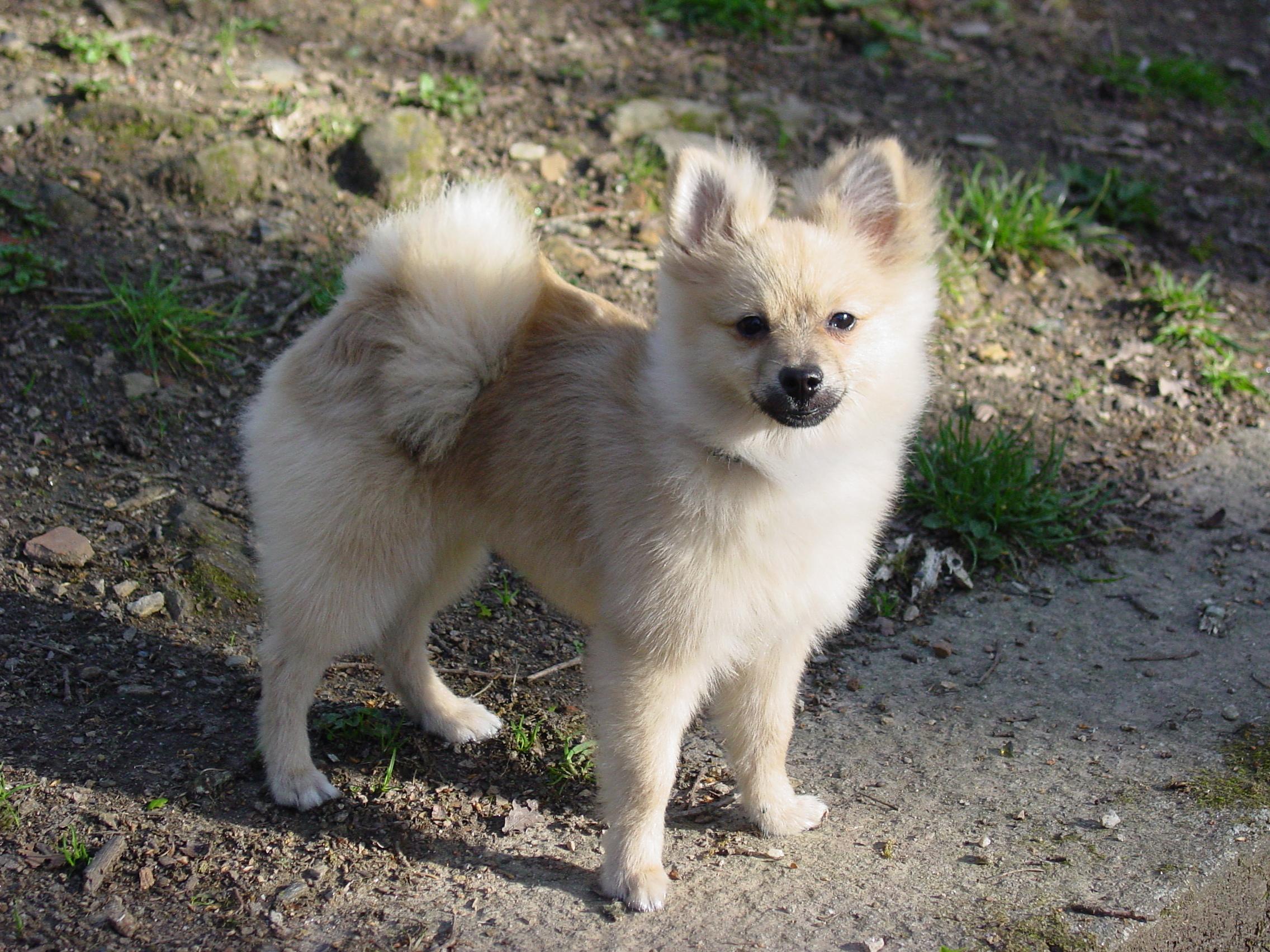
    Pomeranian care fits a small dog with a bold, alert personality, a dense double coat and a strong need for companionship. The breed commonly weighs 3–7 pounds and stands about 6–7 inches at the shoulder, according to the American Kennel Club. Its size makes apartment life practical, but it also creates real safety concerns around falls, rough handling, larger dogs and wildlife. A good home treats a Pomeranian as an active dog rather than a decorative toy.

    Temperament and household fit

    Pomeranians are typically lively, curious and quick to notice changes around them. Many form close bonds with their people and enjoy training, play and participation in daily routines. Their alertness can become frequent barking when every hallway sound or visitor triggers a response. Rewarding calm behavior, teaching a quiet cue and providing planned mental work are more effective than punishment.

    The breed can do well in a city flat or suburban house because physical exercise can be split between short walks and indoor games. Families with young children need especially careful supervision. A three-to-seven-pound dog can be injured by a fall, a closing door or an enthusiastic child who mistakes the dog for a stuffed toy. Older children who can follow handling rules are often a better match. Introductions to other pets should be gradual, and play with much larger dogs should remain supervised even when everyone is friendly.

    Exercise and mental enrichment

    A healthy adult usually benefits from several short activity sessions each day: walks at an individual pace, sniffing, games and reward-based training. There is no universal minute target because age, airway health, orthopedic comfort, weather and fitness differ. The AKC notes that Pomeranians can meet much of their exercise need with indoor play and short walks, but this does not mean they should spend the day without movement or stimulation.

    Use a secure harness and leash outdoors. The breed can fit through surprisingly small fence gaps, and a tiny dog can be vulnerable to traffic, uncontrolled dogs and birds of prey. Avoid repeated jumping from beds and sofas; ramps, steps and floor-level play reduce impact on delicate limbs. In hot or humid weather, choose cooler hours and stop for heavy panting, weakness, noisy breathing or distress. Puppies need brief, varied sessions rather than forced running while bones and joints develop.

    Training, socialization and barking

    Start house training, comfortable handling, recall and loose-leash skills early. Frequent toilet opportunities and close supervision matter because a small puppy has a small bladder. Reward the exact behavior you want with food, toys or access to something enjoyable. Harsh corrections can increase fear and defensive behavior without teaching a useful alternative.

    Thoughtful socialization exposes a puppy to different people, surfaces, sounds, grooming tools and calm vaccinated dogs at a pace that keeps the puppy comfortable. The goal is steady confidence, not maximum exposure. Teach settling on a mat, trading objects and allowing feet, ears, mouth and coat to be examined. For barking, identify the trigger, create distance when needed and reward quiet attention before arousal escalates. Daily trick training, food puzzles and scent searches give this intelligent breed productive work.

    Coat, teeth and routine grooming

    The Pomeranian has a soft undercoat beneath longer guard hair. Brush methodically to the skin at least weekly, and more often during seasonal shedding, using tools recommended by a breeder or qualified groomer. Pay attention behind the ears, under the front legs, around the trousers and beneath a harness, where friction encourages mats. Pulling at tight mats hurts; a groomer can remove them safely and show an owner how to prevent recurrence.

    The AKC recommends a full professional groom about every four to six weeks for owners who do not perform bathing, drying, ear care and nail trimming at home. Avoid shaving the double coat for convenience because regrowth can be unpredictable and clipping does not remove the need for skin care or heat management. Check nails regularly, inspect ears without inserting swabs into the canal, and use dog-safe dental care. Small breeds are prone to crowded teeth, so daily tooth brushing and veterinary dental examinations deserve the same priority as coat care.

    Feeding and healthy weight

    Feed a complete diet appropriate for the dog’s life stage and measure portions rather than leaving an unlimited bowl. The correct amount depends on the food’s calorie density, the dog’s age, neuter status, activity and body condition. Treats used for training count toward daily intake; very small pieces are enough for a very small dog. A veterinarian can help set a target weight and assess whether ribs are easy to feel beneath a visible waist.

    Puppies may need multiple scheduled meals, and any toy-breed puppy that becomes weak, trembly, unusually sleepy or uncoordinated needs urgent veterinary advice because low blood sugar is one possible cause. Fresh water should always be available. Sudden diet changes can upset digestion, so transition foods gradually unless a veterinarian directs otherwise. Avoid unbalanced homemade recipes and never give toxic foods such as chocolate, grapes, raisins, onions, xylitol or alcohol.

    Health screening and veterinary priorities

    The American Pomeranian Club recommends patella evaluation, a cardiac examination and an ophthalmologist evaluation for breeding dogs, with thyroid screening listed as an additional recommendation. Buyers should verify results in the relevant public registry rather than accepting a statement that parents were “vet checked.” Screening reduces risk at the population level but cannot guarantee that an individual puppy will never become ill.

    Breed-associated concerns include luxating patellas, heart disease, collapsing trachea, eye disease, hypothyroidism, seizures and Alopecia X. A cough, honking sound, exercise intolerance, fainting, sudden lameness, painful eye, hair loss or skin change deserves veterinary assessment rather than an online diagnosis. A harness can reduce pressure on the neck, although it cannot prevent every airway problem. Keep preventive care current, discuss dental cleaning, and ask a veterinarian about parasite protection suited to local risks.

    Choosing a breeder or rescue

    A responsible breeder discusses temperament and health openly, provides verifiable screening records, raises puppies in a clean social environment and remains available throughout the dog’s life. Avoid sellers who market extremely undersized “teacup” dogs as a separate breed, promise a precise adult weight, always have multiple litters ready, or will not show where puppies are raised. Extreme miniaturization can magnify fragility and medical risk.

    Adult Pomeranians and mixes are also available through shelters and breed rescues. Ask about dental condition, knees, heart, airway, housetraining, handling and behavior around children or animals. Whether adopting or buying, budget for professional grooming, veterinary dentistry, emergency care, secure equipment and a lifespan the AKC estimates at 12–16 years. The right match comes from the dog’s health and temperament, not color, size trend or social-media appearance.

    Frequently asked questions

    How much exercise does a Pomeranian need?

    Most healthy adults do well with several short walks, play periods and training sessions each day. Adjust the amount for age, weather, fitness, airway health and orthopedic comfort.

    Are Pomeranians good apartment dogs?

    They can be excellent apartment companions when owners provide daily activity, toilet breaks, mental enrichment and patient training for alert barking.

    How often should a Pomeranian be groomed?

    Brush to the skin at least weekly and more often during heavy shedding. Many owners schedule a professional bath and full groom every four to six weeks.

    What health tests should Pomeranian breeders complete?

    The American Pomeranian Club recommends patella, cardiac and ophthalmologist evaluations, with thyroid testing as an additional recommendation. Results should be independently verifiable.

    Are Pomeranians safe with young children?

    Their tiny bodies are easily injured, so all interaction needs active adult supervision. Homes with older children who understand gentle handling are often a better fit.

    Sources

  • Why Sea Turtles Return to Nesting Beaches

    A female sea turtle may cross hundreds or thousands of kilometres of ocean and later nest in the same broad coastal region where she hatched decades earlier. Biologists call this pattern natal homing or natal philopatry. It is not a perfect return to one remembered patch of sand, and turtles sometimes colonize new beaches. Even so, tagging, genetics and navigation experiments show a powerful tendency to return to natal regions. The leading explanation combines a large-scale magnetic map with local environmental cues, allowing a turtle to approach the correct coast and then refine its destination.

    Natal homing connects a long life cycle

    Sea turtles begin life by crawling from a nest to the ocean. Juveniles may spend years moving through offshore and coastal habitats before adults migrate between feeding areas and breeding regions. In many populations, females then lay eggs near their region of origin. This return can occur after a long interval because sea turtles mature slowly and may not reproduce for decades.

    “Home” is best understood at the scale supported by evidence. Some turtles return to a particular island or short section of coast, while others nest within a wider rookery. Individuals may use different beaches in different nesting seasons or even within one season. Natal homing describes a strong tendency, not an infallible rule that every female reaches the exact place where her egg was buried.

    Genetics revealed the pattern before navigation was understood

    Female sea turtles pass mitochondrial DNA to their offspring. When females repeatedly return to natal nesting regions, lineages become concentrated at particular rookeries. Researchers have found this population structure in several species, providing evidence that nesting females do not mix randomly across all suitable beaches. Tagging and satellite tracking add direct records of adults returning to breeding regions after feeding elsewhere.

    Male movements are harder to study because males do not crawl ashore to nest. Genetic work nevertheless indicates that males can also show natal-region fidelity when returning to breed. The strength and geographic precision of homing vary among species and populations, so scientists avoid treating one well-studied loggerhead rookery as a universal model for every sea turtle.

    Earth’s magnetic field can provide a large-scale map

    Earth’s magnetic field differs from place to place. Two measurable features, field intensity and inclination angle, often form geographic gradients along coastlines. Laboratory experiments show that loggerhead hatchlings can distinguish magnetic fields representing different points on an ocean route and respond with directions that would help keep them within favorable currents. Juvenile green turtles exposed to simulated fields from locations north or south of their feeding area also oriented in homeward directions.

    The geomagnetic imprinting hypothesis proposes that young turtles learn magnetic characteristics associated with their natal region and later use a magnetic map to find it. A long-term analysis of loggerhead nesting in Florida found that nest distributions shifted in ways predicted by gradual changes in the magnetic field: nests became more concentrated where magnetic signatures converged and more dispersed where they diverged. This is strong evidence consistent with magnetic imprinting, although scientists have not identified every sensory and learning mechanism involved.

    Local cues may guide the final approach

    A magnetic signature is better suited to locating a coastal region than one exact nest site. Once nearby, turtles may combine magnetic information with waves, currents, odors, shoreline shape and other local cues. The relative importance of these signals remains an active research question. A turtle returning to an island faces a different navigational problem from one approaching a long north–south mainland coast.

    This layered explanation avoids claiming that turtles follow a single internal compass from start to finish. A compass supplies direction, while a map supplies position relative to a goal. Experienced adults may also update information during later nesting visits. Navigation can therefore involve inherited responses, early learning and information gained through repeated migrations.

    Why returning to a natal region can be useful

    A beach that successfully produced a hatchling has at least once provided workable sand, temperature, elevation and access to the sea. Returning to that region can reduce the risks of searching an enormous coastline for an untested site. Shared nesting destinations also bring adults into the same breeding system despite widely separated feeding grounds. Readers can connect this migration with the lives of the Green Sea Turtle and the ocean-spanning movements of the Leatherback Sea Turtle.

    Strict fidelity would also carry costs. Beaches erode, storms reshape shorelines and climate changes sand temperature and inundation risk. Rare “straying” to a different suitable beach allows new rookeries to form and can help a population respond when old habitat disappears. Researchers have documented sporadic loggerhead nesting that appears consistent with long-distance colonization, showing that natal homing leaves room for exploration.

    Homing shapes both conservation and risk

    Because breeding adults repeatedly depend on particular regions, losing one nesting area can damage a distinct population rather than being easily offset by an intact beach elsewhere. Coastal construction, hard shoreline armoring, vehicles, disturbance, egg collection and rising seas can reduce nesting success. Artificial light can disorient hatchlings and may disturb nesting females. Protection must cover the beach, nearshore water and migratory routes linking breeding and feeding grounds.

    Magnetic navigation also raises questions about human-made electromagnetic fields, although evidence for population-level effects from specific infrastructure remains incomplete. Conservation decisions should distinguish demonstrated threats from plausible mechanisms still being tested. The clearest actions are to protect dark, accessible beaches; reduce bycatch and pollution; manage human activity during nesting; and monitor each rookery over many years.

    Scientists test a journey they cannot watch continuously

    Researchers combine several methods because no single tool follows a turtle from hatching to first reproduction. Flipper tags and satellite transmitters reveal adult movements. Genetic markers connect animals at feeding grounds or breeding areas with likely source populations. Controlled magnetic-field experiments test whether turtles detect positional information, while long-term nest surveys reveal shifts across coastlines.

    Each method has limits. Tags record only marked animals, satellite devices operate for finite periods and hatchlings are too small for long deployments. Genetics reveals population relationships but not every decision made during a migration. Laboratory orientation demonstrates capacity under controlled conditions rather than reproducing an entire ocean crossing. Conclusions are strongest when experiments, tracking, genetics and field patterns point in the same direction.

    Frequently asked questions

    Do sea turtles return to the exact beach where they hatched?

    Many return to the same broad nesting region, and some show finer-scale fidelity, but the return is not always to one exact point. Precision varies among individuals, species and coastlines.

    How do sea turtles find their natal nesting region?

    The leading explanation is that they use Earth’s magnetic field as a large-scale map and combine it with local cues near the coast. The full sensory sequence is still being studied.

    Can sea turtles sense Earth’s magnetic field?

    Yes. Controlled experiments show that hatchling and juvenile sea turtles respond to magnetic field features associated with different geographic locations.

    Do male sea turtles also return to natal regions?

    Evidence from genetics and tracking indicates natal-region fidelity in males as well as females, although males are more difficult to observe because they do not come ashore to nest.

    Why do sea turtles sometimes nest somewhere new?

    Occasional straying allows colonization of suitable habitat and prevents natal homing from becoming absolute when storms, erosion or long-term environmental change alter old nesting areas.

    Sources

  • Boston Terrier

    Boston Terrier

    The Boston Terrier is a compact American companion breed with a short coat, square outline and distinctive white markings. The American Kennel Club standard divides adults into weight classes under 15 pounds, 15 to under 20 pounds, and 20 to no more than 25 pounds. Often called the “American Gentleman,” the breed is commonly sociable, playful and closely attached to people. Its small size can suit city life, but a short muzzle and prominent eyes add health and safety responsibilities that prospective owners should understand before bringing one home. Families comparing small companion breeds can also review the Havanese guide, especially its coat care and time-alone needs.

    Temperament and household fit

    Many Boston Terriers are affectionate, alert and eager to join household activities. They often enjoy visitors and can live well with considerate children or other pets after careful introductions. These are breed tendencies rather than promises: inherited temperament, early experience, training and health shape each dog. Adults should supervise every interaction with young children, protect the dog’s resting place and teach children never to grab, corner or climb on a dog.

    A Boston may fit an apartment when toilet breaks, play, exercise and quiet-time training are reliable. The breed’s people-focused nature means long, routine periods alone may be difficult. Build independence gradually with a safe resting area, a food toy and brief absences. Persistent barking, destructive behavior, pacing or house soiling during departures deserves help from a veterinarian or qualified behavior professional rather than punishment.

    Exercise, heat and breathing safety

    Healthy adults usually benefit from daily walks, play and short training sessions, adjusted for age, fitness and individual breathing. Several moderate outings are safer than one exhausting workout. Puppies need exploration and controlled play without repeated high jumps or forced distance running. Older dogs may need shorter routes and better footing. Sniffing games, food searches and simple tricks add mental work without demanding continuous speed.

    Boston Terriers are brachycephalic, meaning their skull and muzzle are shortened. Some breathe freely, while others develop brachycephalic obstructive airway syndrome. Noisy breathing should not automatically be dismissed as normal. Avoid strenuous activity in heat or humidity, walk during cooler hours, carry water and use a well-fitted harness if neck pressure worsens breathing. Stop immediately for distressed breathing, weakness, blue or gray gums, confusion or collapse and seek urgent veterinary care. Never leave any dog in a parked vehicle.

    Training, socialization and daily manners

    Use reward-based training with small food rewards, toys and access to valued activities. Teach name response, recall, loose-leash walking, leave-it, settling on a mat and calm handling. Short sessions suit a lively companion and make it easier to finish before attention fades. Harsh corrections can create fear or conflict and do not explain the behavior you want. A front-clip or comfortable Y-shaped harness may help with walking while training progresses, provided it does not restrict shoulder movement.

    Good socialization gives a puppy safe, positive exposure to people, friendly vaccinated dogs, traffic sounds, grooming, car travel and different surfaces. It does not mean forcing greetings. Let the dog observe from a comfortable distance and pair new experiences with rewards. Continue social learning through adulthood. Practice calm behavior around doorways and visitors so enthusiasm does not become jumping or frantic greetings.

    Coat, eyes, ears, teeth and nails

    The smooth short coat needs modest grooming. Brush weekly with a soft brush or grooming mitt to collect loose hair and inspect the skin. Bathe when dirty with a dog-safe product and dry the skin folds around the face carefully. Check ears for redness, odor, discharge or pain. Trim nails before they become long enough to alter gait, and introduce nail handling with tiny steps and rewards.

    Large, prominent eyes are vulnerable to irritation and injury. Keep sharp vegetation away from face height and seek prompt veterinary care for squinting, redness, cloudiness, discharge or rubbing. Do not use leftover eye medication. Brush teeth daily with canine toothpaste because small dogs can accumulate dental disease. A veterinarian can assess retained baby teeth, crowded teeth, gum disease and the need for professional cleaning.

    Feeding and healthy body condition

    Feed a complete and balanced diet appropriate for the dog’s life stage. Measure meals and count training treats within the daily total. Package directions are starting estimates; actual needs vary with size, age, activity, neuter status and health. A veterinarian can help assess body condition: ribs should be easy to feel beneath a light covering, with a visible waist from above. Excess weight increases physical effort and can worsen heat and breathing stress.

    Provide fresh water at all times and change foods gradually unless a veterinarian directs otherwise. Use a bowl or feeder that lets the dog eat comfortably without frantic gulping. Repeated vomiting, regurgitation, coughing during meals, diarrhea or poor growth requires veterinary assessment. Avoid supplements and extreme diets based on online claims, because unnecessary additions can unbalance an otherwise complete food.

    Health screening and veterinary care

    Responsible breeders document health testing for the parents and make results available for buyers to verify. The Boston Terrier Club of America’s current health certification information includes hearing evaluation with BAER testing, an eye examination and patellar evaluation; buyers should check the club and Orthopedic Foundation for Animals for the current panel. The OFA respiratory function grading scheme also accepts Boston Terriers for objective airway assessment. A CHIC number means the required results were completed and made public, not that every result was normal.

    Possible concerns include airway obstruction, heat intolerance, corneal injury, cataracts, deafness, kneecap instability and spinal abnormalities. Risk is not a diagnosis, and many dogs remain active companions with thoughtful care. Schedule preventive examinations, vaccination, parasite control and dental care according to local veterinary advice. Seek care for exercise intolerance, fainting, persistent cough, new breathing noise, limping, head shaking, vision change, seizures or unexplained behavior change.

    Choosing a breeder or rescue

    Ask a breeder for the registered names of both parents and verify health results rather than accepting “vet checked” as proof. Meet the mother and, when possible, other adult relatives. Observe breathing at rest and after gentle movement, movement quality, eye comfort and recovery from excitement. A responsible breeder discusses limitations honestly, raises puppies in a clean enriched setting, uses a written contract and remains available after placement. Avoid sellers who market unusual colors as more important than health or who refuse to share records.

    Rescue can be a good choice when the organization provides a clear account of medical needs, behavior, home habits and reactions to children or animals. Before arrival, prepare secure identification, a comfortable harness, barriers, safe chew items and a quiet bed. Keep the first days predictable, continue the familiar food at first and arrange a veterinary visit. Pet insurance or a dedicated emergency fund can make unexpected airway, eye or orthopedic care easier to manage.

    Safety and lifelong welfare

    Use a leash near traffic and a secure crate or tested restraint in vehicles. Because a Boston Terrier can be vulnerable to temperature extremes, provide a warm indoor resting place in cold weather and shade, water and limited exertion in heat. Keep medicines, xylitol, chocolate, grapes, raisins and other toxins inaccessible. Choose toys large enough not to swallow and inspect them for damaged pieces.

    Good welfare includes companionship, sleep, gentle training, chances to sniff and play, routine medical care and protection from avoidable breathing stress. The right home values the dog as a social companion rather than treating small size as evidence of low needs. With realistic expectations and prompt attention to airway and eye health, a Boston Terrier can participate in family life for many years.

    Frequently asked questions

    How much exercise does a Boston Terrier need?

    Most healthy adults benefit from daily walks and play in several moderate sessions. Adjust activity for age, fitness, weather and breathing, and stop before the dog becomes distressed.

    Are Boston Terriers good apartment dogs?

    They can live well in apartments when they receive reliable toilet breaks, exercise, enrichment and training for quiet settling and gradual time alone.

    Do Boston Terriers tolerate hot weather?

    Their short muzzle can reduce cooling efficiency. Exercise in cooler periods, provide shade and water, avoid strenuous heat exposure and seek urgent help for breathing distress or collapse.

    How often should a Boston Terrier be groomed?

    Brush the short coat about weekly, check ears and skin regularly, trim nails as needed and brush teeth daily. Eye discomfort should be assessed promptly by a veterinarian.

    What health tests should a Boston Terrier breeder show?

    Ask for publicly verifiable results for hearing, eyes and patellas and check the current parent-club and OFA recommendations, including available respiratory function assessment.

    Sources and image credit

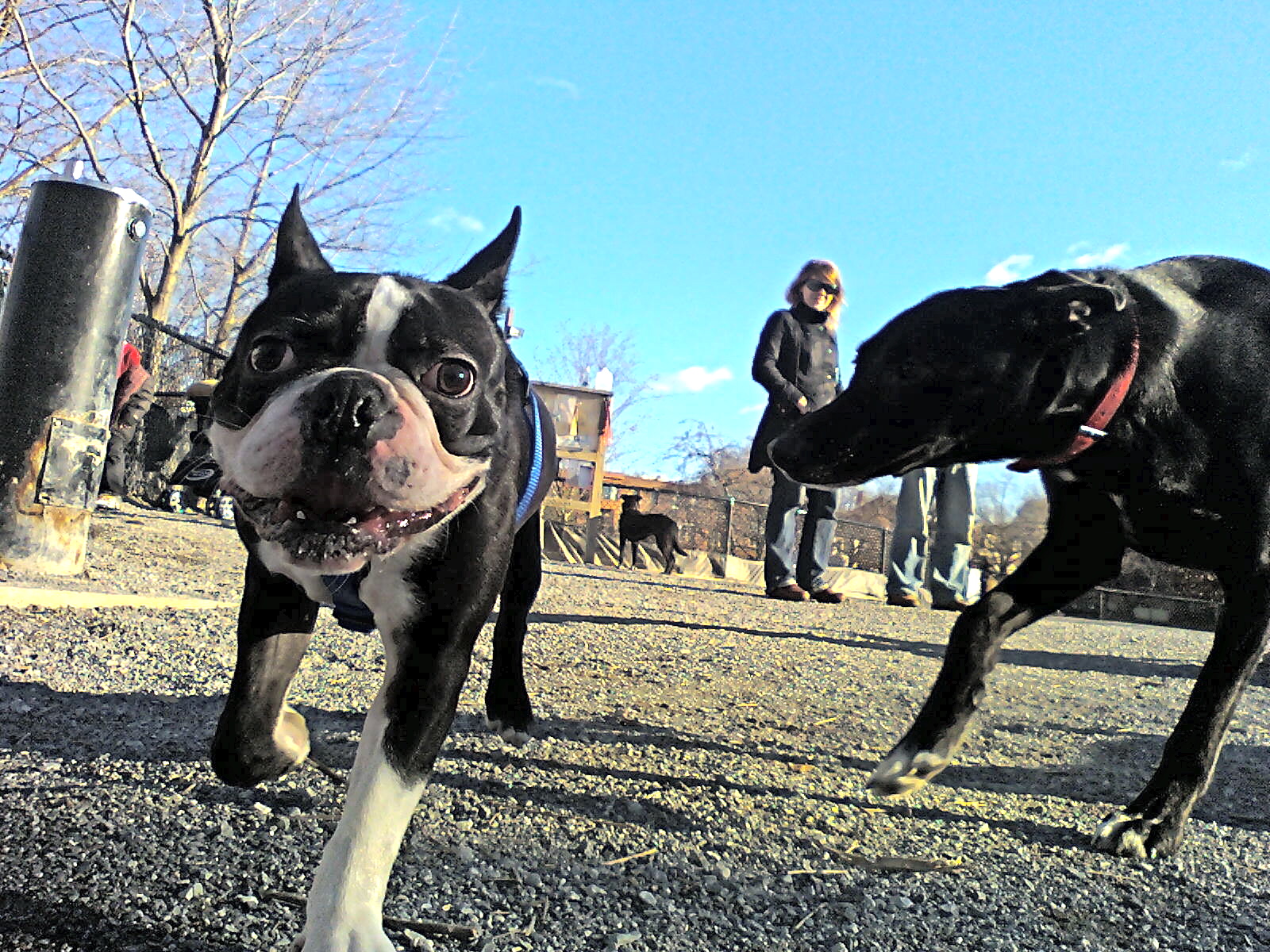
    Featured image: Boston Terrier in a Philadelphia dog park, photograph by Lyonspen via Wikimedia Commons, licensed under CC BY-SA 3.0.

  • How Wolf Packs Work

    A wild wolf pack is usually a family, not a gang of unrelated animals locked in a constant contest for rank. The core is typically a breeding pair and their offspring from one or more years. Parents guide travel, reproduction and much of the group’s work because they are experienced adults raising their young. This family model explains wolf behavior more accurately than the popular image of an “alpha” winning leadership through repeated fights.

    Most packs begin as a family

    A pack often forms when two dispersing wolves pair, establish a territory and produce pups. If some young remain after their first year, the next litter joins older siblings and the family becomes larger. An unrelated wolf may sometimes join, and large packs can contain more than one breeding female, but those cases add variation to the family pattern rather than replacing it.

    Pack size changes throughout the year. Birth adds pups in spring, while mortality and dispersal reduce numbers. Prey size and abundance also matter because every additional member needs food. The International Wolf Center notes that packs may be small where prey is small and can exceed 20 wolves in parts of Alaska and northwestern Canada. Exceptional groups should not be treated as the standard everywhere.

    Why “alpha wolf” can mislead

    The classic alpha story grew partly from observations of unrelated captive wolves placed together. Those artificial groups had to negotiate unfamiliar relationships and often showed intense competition. Long-term field observations revealed a different pattern in free-ranging packs: the leading male and female are usually the parents, naturally senior to their dependent offspring.

    Wild wolves do show dominance and submission. Posture, tail position, facial expression and access to food can communicate status. The mistake is turning those interactions into a rigid ladder maintained mainly through violence. Biologist L. David Mech argued that “breeding male,” “breeding female” or simply “parents” usually describes the animals better. Leadership can also shift with the task rather than belonging to one permanent dictator.

    Work is shared rather than identical

    Pack members cooperate to defend territory, hunt, raise pups and protect food. Parents contribute heavily, but older offspring can help provision and guard younger siblings. Mech’s observations found a division of labor in which the female parent was especially important in pup care and defense, while the male parent often took a larger role in foraging, provisioning and associated travel. That is a tendency, not an inflexible rule.

    Age and experience affect decisions. Older wolves may know routes, prey behavior and territorial boundaries. A hungry animal may initiate movement, while another leads during a hunt. A pack can benefit from several capable adults rather than depending on a single leader for every decision. Loss of a breeding wolf can destabilize a group because that individual is a mate, parent and source of knowledge—not merely because a rank position becomes empty.

    Cooperative hunting has limits

    Several wolves can locate, test and pursue large prey more effectively than one wolf alone. Cooperation allows them to challenge animals much larger than themselves, defend a carcass and feed pups. Yet a bigger pack is not automatically better. More hunters may improve some parts of a chase while also creating more mouths to feed. Terrain, snow, prey age and condition, and the wolves’ experience all influence the outcome.

    Wolves do not use a single rehearsed formation. They assess moving prey, respond to openings and sometimes abandon an attempt. Hunts frequently fail. The family’s success depends on persistence and learning across many encounters. The Gray Wolf profile covers the species’ broader diet, range and physical adaptations, while pack structure explains how those abilities are coordinated socially.

    Pups are raised by more than their mother

    Pups are born in a den after a gestation of about 63 days. For the first weeks they depend closely on their mother. Other pack members bring food, often regurgitating meat as pups are weaned. They may also guard, play with and supervise young wolves. This shared care makes wolves cooperative breeders.

    As pups grow, the family may shift from the den to rendezvous sites where young animals remain while adults travel. By roughly seven or eight months, pups are close to adult size and begin moving more regularly with the pack. Their first year teaches them routes, signals, prey handling and the boundaries of relationships. Older siblings gain experience while helping the new litter.

    Dispersal creates new packs

    Young wolves do not all stay with their parents. Many leave between about one and several years of age, though timing varies. A disperser may travel alone across unfamiliar terrain, searching for a mate and vacant territory. This is a dangerous period involving roads, people, rival packs and uncertain food, but it is also how wolf populations exchange genes and establish new families.

    Dispersal makes pack membership fluid. One year’s large family may be smaller the next spring, then grow again after pups are born. A wolf’s departure is therefore not necessarily exile after losing a dominance fight. It is often a normal life-history step toward reproduction. Related families can occupy neighboring territories, but they still defend space and resources from one another.

    How wolves hold territory and stay connected

    Howls help separated members locate one another and can advertise occupation to neighboring packs. Scent marks add information along routes and boundaries. Direct encounters between packs can be dangerous, so long-distance signals may reduce some confrontations by showing that an area is defended.

    Within the family, wolves use howls, whines, growls, scent, touch and body posture. Greetings reinforce bonds after separation. Play lets young wolves practice movement and social limits. A lowered body or tucked tail can defuse tension. Communication helps coordinate a group whose members may spread out during travel or feeding rather than moving as a tight formation at all times.

    Pack structure changes with ecology and human pressure

    There is no universal pack size or territory size. Wolves living with abundant large prey may support different group sizes than wolves hunting smaller or scattered prey. Yellowstone packs have sometimes become unusually large and socially complex, while other populations commonly form smaller families. Geography, prey density, neighboring packs and disease all influence the pattern.

    Human-caused mortality can remove parents or experienced adults and alter age structure. Research in Denali found that breeding members can function as social glue, so losing one may affect reproduction and pack persistence. Conservation therefore concerns relationships as well as head counts. A population with the same number of wolves can function differently if stable families repeatedly lose adults.

    Frequently asked questions

    Is an alpha wolf the strongest wolf in the pack?

    In most wild packs, the leading male and female are the parents. Their position comes mainly from being experienced breeding adults, not from repeatedly fighting unrelated rivals for control.

    How many wolves live in a pack?

    Pack size varies with births, dispersal, mortality and prey. Many packs contain a breeding pair and several offspring, while some northern packs can exceed 20 members and exceptional groups grow larger.

    Does every wolf in a pack hunt?

    Participation varies with age, health and circumstances. Adults and older young may hunt and provision the family, while small pups remain at a den or rendezvous site under care.

    Why do young wolves leave their pack?

    Dispersal allows young adults to find unrelated mates, vacant territory and opportunities to form new packs. It is a normal part of wolf life rather than automatic punishment.

    Sources

  • Pembroke Welsh Corgi

    Pembroke Welsh Corgi

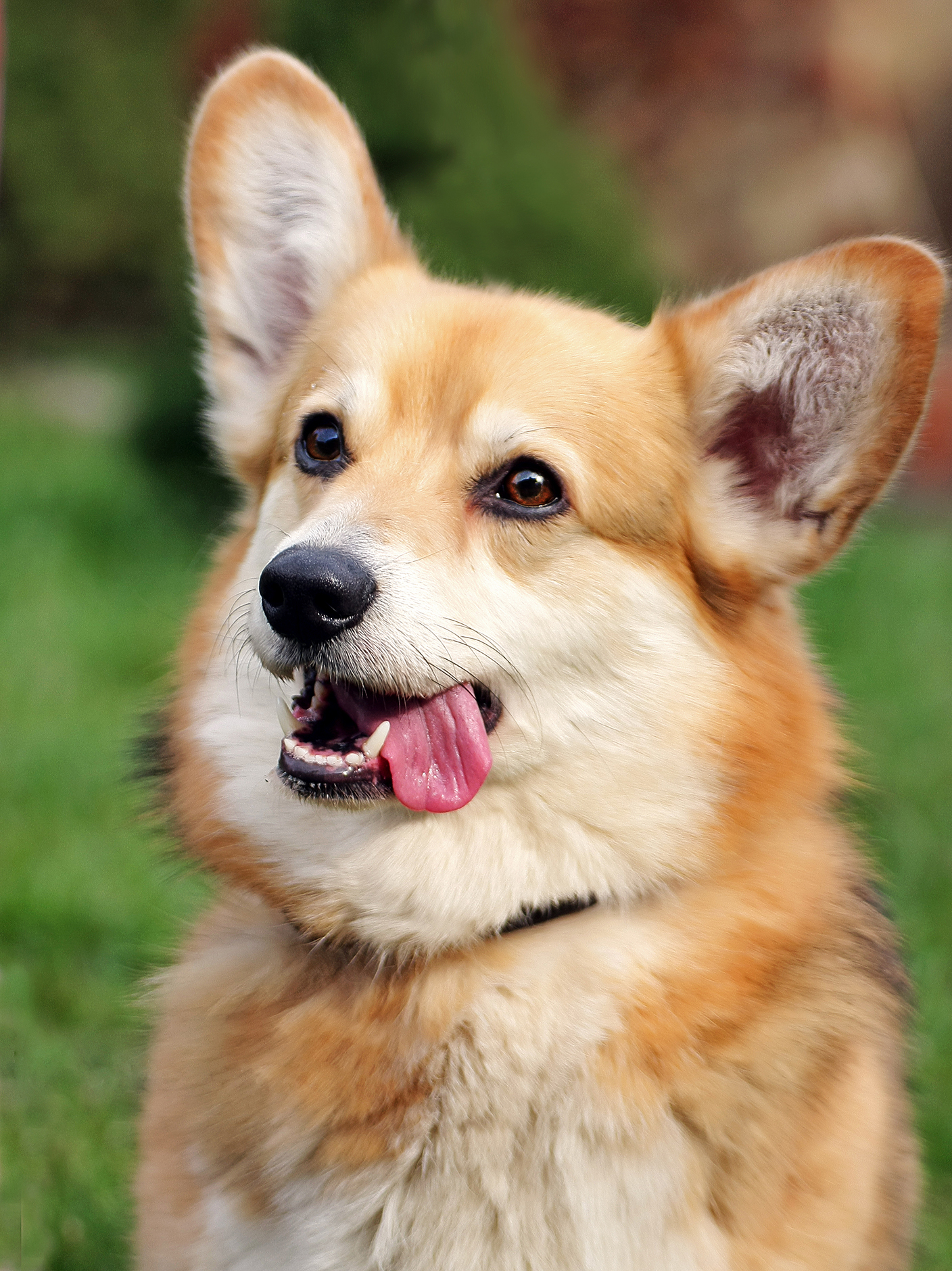
    The Pembroke Welsh Corgi is a compact Welsh herding breed with an alert expression, upright ears, a weather-resistant double coat and far more drive than its short legs suggest. The American Kennel Club standard describes adults as 10–12 inches at the shoulder, with males up to 30 pounds and females up to 28 pounds. A Pembroke can be an affectionate, highly trainable companion, but prospective owners should plan for daily activity, frequent shedding, vocal alerting and careful weight management.

    Temperament and household fit

    Pembrokes were developed to move cattle and work around farms. That background helps explain their confidence, quick reactions and tendency to monitor movement. Well-bred dogs are typically lively, loyal and interested in their people. They are small enough for many homes but are not passive lapdogs. An owner who enjoys training, walks and shared activities is usually a better match than someone seeking a dog content with little engagement.

    Many live successfully with children when socialized and supervised. Herding behavior can appear as chasing or nipping at moving heels, so teach an alternative before it becomes a habit. Children should never climb on, corner or disturb a sleeping or eating dog. Introduce cats and dogs gradually, give each animal separate resources and judge compatibility by the individual rather than assuming the breed guarantees it.

    Exercise and enrichment

    Healthy adults benefit from daily walks, sniffing, play and short training sessions. Moderate exercise suits the breed better than repeated high-impact jumping. Hiking, tracking, obedience, rally, controlled fetch and herding activities can provide useful variety. Increase intensity gradually, avoid hot pavement and watch for slowing, limping or reluctance to move.

    Puppies need exploration, social learning and sleep rather than forced running. Their skeletons are still developing. Indoors, food puzzles, scent searches, toy rotation and calm settling practice work the brain without pounding the joints. A bored Pembroke may bark, chew, chase or invent a patrol route through the house. Activity should build fitness and self-control instead of simply exhausting the dog.

    Training and socialization

    Start reward-based training as soon as the dog arrives. Useful early skills include name response, recall, loose-leash walking, leave-it, dropping objects, waiting at doors, settling on a mat and accepting handling. Pembrokes learn quickly and may also learn unwanted patterns quickly. Prevent rehearsal with gates, leashes and sensible storage, then reinforce the behavior you want.

    Socialization means controlled, positive exposure rather than forced greetings. Pair people, friendly vaccinated dogs, vehicles, household noises, surfaces and veterinary handling with food, play and distance. Teach the puppy that it can look and disengage. If it freezes, hides, lunges or cannot take food, the situation is too difficult. A qualified reward-based trainer or veterinary behavior professional should address persistent fear, guarding or aggression early.

    Coat, nails, teeth and ears

    The short double coat sheds throughout the year and often releases much more undercoat seasonally. Brush at least weekly and more often during heavy shedding. A slicker brush and comb can lift loose coat without shaving the protective layers. Bathe when dirty with dog-safe shampoo, rinse thoroughly and dry the dense coat to the skin. Sudden hair loss, odor, sores or persistent itching needs veterinary assessment.

    Trim nails regularly so the feet maintain stable contact with the floor. Brush teeth daily with canine toothpaste and arrange professional dental care as advised. Check ears for redness, odor, pain or discharge without inserting swabs into the canal. Cooperative care training—paw touches, chin rests and brief stillness—makes routine grooming safer and reduces stress.

    Feeding and weight control

    Feed a complete and balanced diet appropriate for age and measure portions. Use part of the daily ration for training and count treats. The Pembroke Welsh Corgi Club of America warns owners not to allow excess weight. Extra mass increases the load on a long-backed, short-legged body and can worsen mobility problems. A veterinarian can show you how to feel the ribs and assess the waist rather than relying only on a scale.

    Avoid unbalanced homemade or raw diets unless formulated and monitored by a board-certified veterinary nutritionist. Keep chocolate, grapes, raisins, xylitol, onions, medications and cannabis products inaccessible. Sudden appetite change, repeated vomiting, diarrhea, abdominal pain or rapid weight change warrants veterinary advice. Fresh water should always be available.

    Health screening and veterinary care

    The national breed club recommends verifiable screening of breeding dogs rather than a vague claim that parents were “vet checked.” The Pembroke Welsh Corgi Club of America highlights hip evaluation and eye examination and discusses inherited risks including von Willebrand disease and degenerative myelopathy. Available tests must be interpreted correctly: a DNA result addresses a specific variant and does not replace clinical examinations or guarantee lifetime health.

    As a chondrodysplastic, long-backed breed, a Pembroke also needs sensible protection from obesity, slippery floors and repeated jumps from furniture. Limping, weakness, dragging toes, back pain or loss of coordination requires prompt veterinary care. Maintain routine examinations, vaccination, parasite prevention and dental care under local guidance. Ask a breeder for original public results for both parents and for a clear family history of longevity and temperament.

    Housing, time alone and safety

    Apartment living can work when exercise, toilet breaks and barking are managed. Floor area matters less than a predictable routine and access to suitable outdoor space. Use non-slip rugs, a supportive bed and ramps or management where repeated stair or furniture jumps are a concern. Secure fencing is valuable because a herding dog may chase movement. An electronic boundary does not stop traffic, wildlife or other dogs from entering.

    Teach time alone in small steps using a comfortable rest area and safe enrichment. Sudden full workdays can cause distress or toileting problems. Arrange a walker or sitter when needed. Keep identification and microchip records current, use a leash near roads and restrain the dog safely in vehicles. Never leave any dog in a parked car.

    Choosing a breeder or rescue

    A responsible breeder discusses strengths and problems openly, documents recommended health screening, raises puppies in a clean enriched setting, uses a contract and remains available after placement. Meet the mother and, when possible, other adult relatives. Avoid sellers focused on “rare” colors, extreme proportions or instant payment, and those unwilling to show where puppies live.

    Rescue is another sound route. Ask how the individual responds to handling, visitors, children, animals, food, confinement, grooming and time alone. Obtain medical records and clarify post-adoption support. Keep the first weeks predictable, schedule a veterinary examination and arrange training early. The goal is a good match, not the fastest placement.

    Frequently asked questions

    Are Pembroke Welsh Corgis good family dogs?

    Many are affectionate and loyal family companions, but their herding drive, alert barking and energy require training, activity and adult supervision around children.

    How much exercise does a Pembroke Welsh Corgi need?

    Healthy adults need daily walks, play and mental work, with intensity adjusted for age, fitness, weather and veterinary advice.

    Do Pembroke Welsh Corgis shed a lot?

    Yes. Their dense double coat sheds year-round and often more heavily during seasonal coat changes, so regular brushing is essential.

    Can a Pembroke Welsh Corgi live in an apartment?

    Yes, if the dog receives reliable exercise, training, toilet access and mental enrichment and the owner manages barking and shared-space manners.

    What health tests should a Pembroke Welsh Corgi breeder show?

    Ask for verifiable hip and eye results and discuss testing for inherited concerns such as von Willebrand disease and degenerative myelopathy, following current national breed-club guidance.

    Sources and image credit

    Featured image: Pembroke Welsh Corgi photographed by Marsiyanka, from Wikimedia Commons, licensed CC BY-SA 3.0.

  • How Elephants Communicate Across Long Distances

    Elephants can remain socially connected even when family members are hidden by vegetation or separated across a wide landscape. They do this with a communication system that combines low-frequency calls, ordinary audible sounds, ground vibrations, smell, touch and visible gestures. Long-distance contact depends especially on rumbles: powerful, information-rich vocalizations whose lowest components may fall below the range of human hearing. These signals do not form a magical private channel. Their reach changes with weather, terrain, vegetation, background noise and the strength of the original call. Yet under suitable conditions they let elephants coordinate movement, recognize callers and advertise reproductive state far beyond visual range.

    Rumbles carry farther than higher-pitched calls

    Sound loses energy as it spreads, and the environment does not weaken every frequency equally. Low-frequency sound generally travels through open habitat with less rapid attenuation than high-frequency sound. Elephant rumbles exploit that advantage. A rumble may contain both infrasonic energy below about 20 hertz and harmonics that people can hear, so calling it “infrasound” does not mean the entire vocalization is inaudible. The trunk, mouth and long vocal tract help shape the outgoing signal.

    Elephants also trumpet, roar, snort, cry and make other calls. Those sounds serve important close- and medium-range roles, but the low fundamental frequencies and high amplitude of some rumbles make them especially useful when a caller and listener are far apart. Field and monitoring studies have detected infrasonic calls over kilometre-scale distances. A fixed maximum would be misleading because transmission changes with wind, temperature structure, foliage, topography and competing sound.

    A call can identify its sender and situation

    A long-distance call is useful only if a listener can extract information from it. Elephant rumbles vary with the caller and context. Research summarized by ElephantVoices shows that calls can carry cues about identity, age, sex, emotional state and circumstances. Playback experiments with African savanna elephants have demonstrated that listeners distinguish familiar from unfamiliar callers. This ability matters in a society where related family units may separate and reunite while moving between food, water and resting areas.

    Different contexts also change what a call accomplishes. A separated elephant may produce a contact call; a family may exchange calls around departure and movement; a female in oestrus can advertise reproductive condition; and a male in musth can signal his state. Alarm and social excitement produce other patterns. These are not words with one fixed translation. Meaning comes from acoustic structure together with the caller’s identity, recent events, the listener’s relationships and other sensory cues.

    Listening coordinates a fluid social network

    Elephant families often operate in a fission-fusion system. Individuals and subgroups do not stay packed together at every moment, but their relationships persist as parties separate and later reunite. Long-range sound helps maintain that network. A matriarch or another experienced adult can pause, orient toward a distant rumble and influence whether the group waits, approaches, avoids the source or changes direction.

    Contact across distance is valuable in habitats where sight lines are poor or resources are scattered. It may help relatives regroup without following the same path, allow potential mates to locate one another and warn listeners about a disturbance. Readers can see how these signals fit the ecology of the African Bush Elephant and the wider relationships described in How Large Predators Shape the African Savanna. The exact repertoire and typical transmission conditions differ among species and habitats, so findings from open savanna should not automatically be applied to dense forest.

    Vocal rumbles also enter the ground

    When an elephant produces a low-frequency rumble, part of the energy can couple into the ground as a seismic vibration. Footfalls, running and forceful movements can create ground-borne signals too. Seismic recordings therefore offer a second physical pathway alongside airborne sound. Studies have recorded matching acoustic and seismic components and have used ground sensors to locate rumbling elephants.

    Playback work provides evidence that elephants respond to seismic components even when researchers remove the airborne acoustic signal. The leading explanations for reception involve vibration-sensitive corpuscles in the feet and bone conduction through the limbs to the inner ear; the trunk may also be placed on the ground during attentive listening. Scientists continue to investigate how these routes contribute under natural conditions. It is safest to say that elephants can detect and discriminate some biologically relevant ground vibrations, while the importance of this channel varies with soil, distance, noise and behavior.

    Air and soil reshape every message

    Long-range communication is a problem of signal-to-noise ratio. In air, wind, temperature gradients and vegetation can bend, absorb or scatter sound. Calls may travel better during stable evening or night conditions than during turbulent daytime heating. In the ground, substrate composition and moisture affect how vibrations propagate. Rock, sand and compact soil do not transmit the same frequencies equally.

    Human activity adds another complication. Engines, roads, machinery and other low-frequency noise can overlap the channels elephants use. Research on wild elephants shows that they detect and react to human-generated seismic cues, but recognizing a disturbance is different from receiving a clear social message through it. As distance grows, fine details degrade before every trace of the call disappears. A listener may detect that an elephant called yet lose some information needed to identify the caller or context.

    Elephants combine several senses

    Communication does not stop when elephants move close enough to see one another. Ear position, head height, posture, trunk movements and approach direction provide visual information. Touch with the trunk, mouth or body helps reinforce greetings, reassurance, play and care. Chemical cues in urine, temporal-gland secretions, breath and other materials can reveal identity and reproductive condition. A distant rumble may begin an exchange that becomes visual, chemical and tactile after the animals meet.

    This multimodal design makes the system resilient. One channel can support another when wind masks sound or vegetation blocks sight. It also explains why observers should avoid interpreting a single trumpet or posture in isolation. The same acoustic feature may accompany different outcomes depending on who is present and what happened immediately before it.

    Researchers study calls without following every herd

    Microphone arrays and autonomous acoustic recorders can monitor elephants over large areas, including forests where cameras have narrow views. Researchers use time differences between sensors to estimate a caller’s location, then classify calls or compare them with known behavior. Geophones add a ground-based view of rumbles and movement. These tools can document presence, activity and travel while reducing the need for constant close observation.

    Automated systems still face difficult errors. Thunder, vehicles, livestock and other animals create confusing sounds or vibrations, and training data may represent some populations better than others. A detection algorithm should therefore support field evidence rather than replace it. Carefully validated passive monitoring can help map habitat use, identify conflict risk and measure how elephants respond to disturbance. The same science that explains communication can improve conservation decisions about corridors, roads and sources of chronic noise.

    Frequently asked questions

    Can humans hear elephant rumbles?

    People can hear the higher-frequency parts of many rumbles, but some energy may fall below typical human hearing. Recordings are often sped up or processed to make the full pattern easier for listeners to perceive.

    How far can an elephant rumble travel?

    Some calls can be detected over several kilometres, but there is no single guaranteed distance. Call amplitude, wind, temperature, vegetation, terrain, background noise and sensor or listener sensitivity all affect the usable range.

    Do elephants communicate through their feet?

    Elephants can detect biologically relevant ground vibrations. Evidence points to vibration-sensitive structures in the feet and bone-conduction pathways, allowing seismic components of rumbles and movements to influence behavior.

    What information is contained in an elephant call?

    Calls can provide cues about identity, sex, age, emotional or motivational state, reproductive condition and context. Listeners interpret those cues together with relationships, recent events and information from other senses.

    Sources